
Winter Hand Care Routine for Dry Hands: 12 Ideas (2026)
Winter Hand Care Routine for Dry Hands: 12 Ideas (2026)
Winter dryness often shows up on your hands first. You step outside on a cold morning, wash your hands a few times, and by lunchtime your knuckles feel tight. Your fingertips look a little rough, and the skin around your nails starts to catch on your sweater. It is not dramatic, but it is uncomfortable. It tends to get worse if you ignore it.
The good news is that a winter hand care routine does not need to be complicated or expensive. Hands dry out for simple reasons. Cold air holds less moisture, indoor heat dries the air even more, and frequent washing strips away the natural oils that keep skin comfortable. A few small, repeatable habits can make a real difference. Wash more gently, moisturize at the right moment, and protect your hands from cold and cleaning products. Here are 12 simple ideas to help your hands feel softer and more comfortable all winter long.
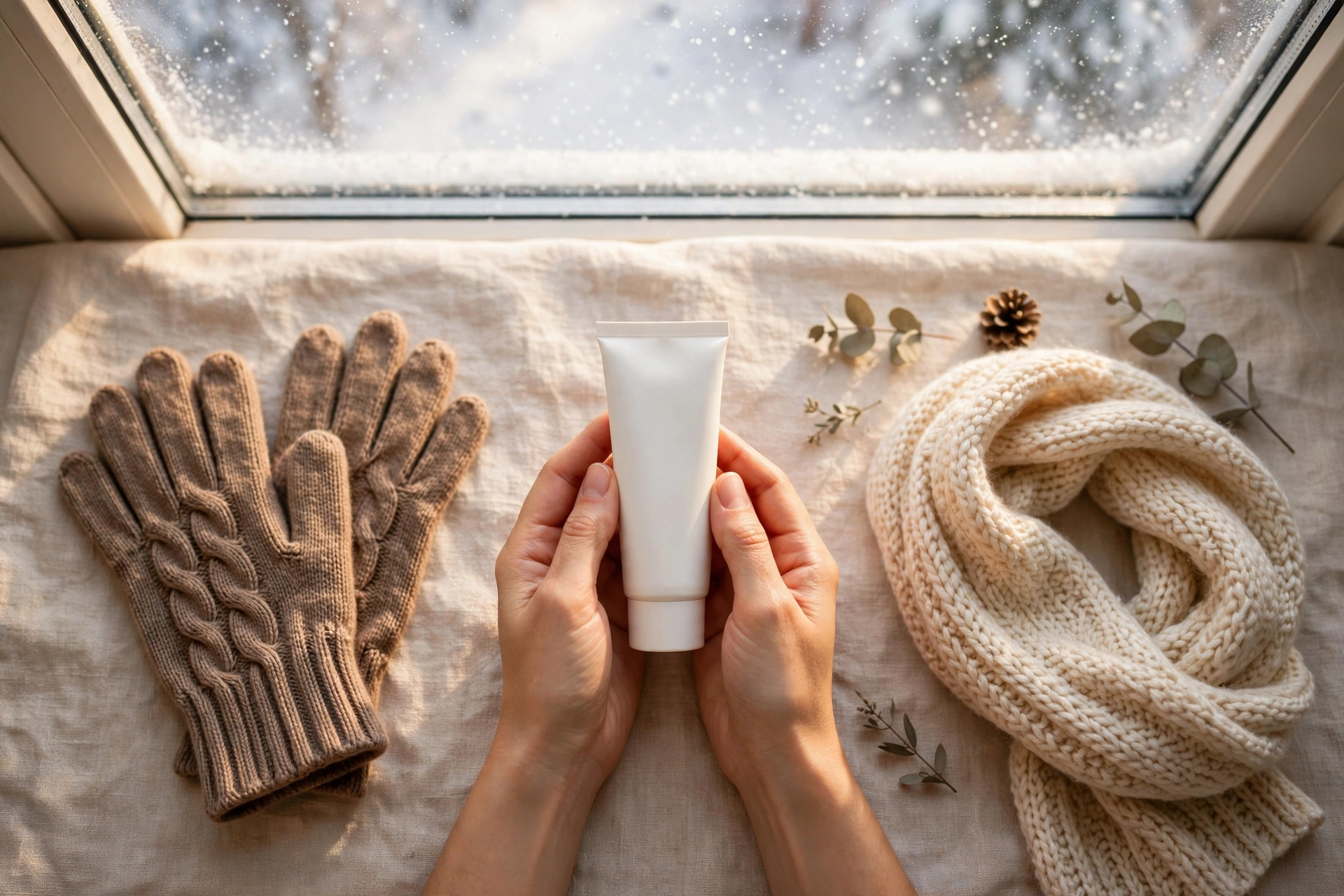
Table of Contents
- Idea 1: Wash with Lukewarm Water and a Gentle Hand Wash
- Idea 2: Moisturize While Hands Are Still Slightly Damp
- Idea 3: Switch to a Thick Hand Cream for Winter
- Idea 4: Seal Knuckles with a Thin Layer of Balm on Very Cold Days
- Idea 5: Try the Overnight Cotton-Glove Treatment
- Idea 6: Give Cuticles and Nails a Little Daily Care
- Idea 7: Exfoliate Gently Once a Week
- Idea 8: Wear Warm Gloves Outside and Protective Gloves at Home
- Idea 9: Keep Hand Cream Where You Actually Use It
- Idea 10: Be Gentler with Hand Sanitizer
- Idea 11: Do Not Forget Sun Protection on the Backs of Your Hands
- Idea 12: Try a Soak-and-Seal Reset for Cracked Knuckles
Idea 1: Wash with Lukewarm Water and a Gentle Hand Wash
Hot water feels wonderful on cold hands. But it is one of the fastest ways to dry them out. Very hot water washes away the skin’s natural oils along with the dirt. That leaves hands feeling tight and papery afterward. Lukewarm water cleans just as well for everyday washing, and it is much kinder to skin that is already dry.
Pair that with a gentle, fragrance-free hand wash rather than a harsh or heavily scented soap. Look for a creamy or moisturizing formula, and use only as much as you need. Wash for about twenty seconds and rinse well. You have already taken the first step: clean hands without stripping them bare.

Winter Tip: Use lukewarm water for everyday washing. Hot water strips the oils dry hands need.
Idea 2: Moisturize While Hands Are Still Slightly Damp
Timing matters more than most people realize. The best moment to moisturize is right after washing, while your hands are still slightly damp. Not dripping wet, and not completely dry. At that point, a cream can help hold the water that is already on your skin. It works instead of trying to replace moisture that has already evaporated.
Pat your hands dry gently with a soft towel, leaving them just a touch damp. Then smooth cream over the backs of your hands, your knuckles, and between your fingers. It only takes a few seconds. It is the habit that most dermatology guidance repeats again and again. Moisturize after every wash when you can.

Winter Tip: Moisturize right after washing, while hands are still slightly damp.
Idea 3: Switch to a Thick Hand Cream for Winter
The light lotion that worked fine in summer often disappears too quickly in winter. A thin, runny lotion can feel nice for a minute, then leave your hands dry again. In cold weather, a thick cream usually lasts longer. Choose the kind that comes in a tube or a jar rather than a pump bottle. It leaves a more comfortable, cushioned feeling.
You do not need a long ingredient list to choose well. In general, look for a rich texture and familiar moisturizing ingredients such as glycerin, shea butter, or ceramides. Choose a fragrance-free option if scented products sting or irritate your skin. A pea-sized amount, rubbed in well, is often enough for one application.

Winter Tip: Choose a thick cream in a tube or jar. It lasts longer than a thin lotion in winter.
Idea 4: Seal Knuckles with a Thin Layer of Balm on Very Cold Days
On the coldest days, even a good cream can feel like it is not quite enough. That is especially true on knuckles, which bend, stretch, and crack first. On those days, try adding a thin layer of plain balm or petroleum jelly over your cream. Put it just on the backs of your hands and knuckles. It acts like a light seal, slowing down the moisture loss that cold wind causes.
A little goes a long way here. Warm a tiny amount between your palms. Press it gently over the driest spots. Give it a minute to settle before you put your gloves on. Save this step for bitter days or evenings at home, when a slightly richer feeling will not bother you.
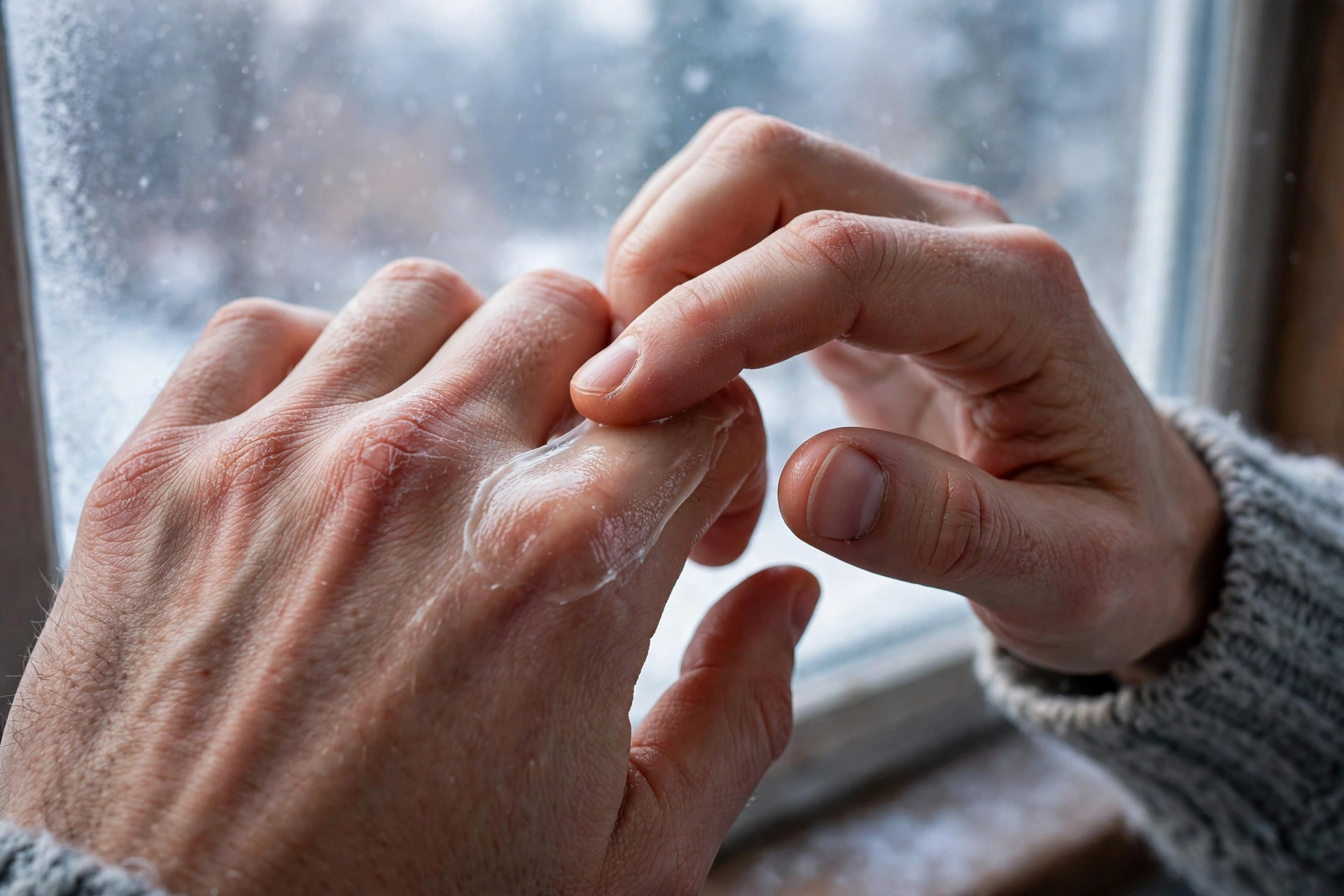
Winter Tip: On bitter days, seal knuckles with a thin layer of plain balm over your cream.
Idea 5: Try the Overnight Cotton-Glove Treatment
Nighttime is the easiest time to give your hands a longer break. You are not washing, typing, or heading outside, so a generous layer of cream has hours to sit undisturbed. After your last wash of the evening, pat your hands dry. Apply a thick layer of cream from wrists to fingertips, and slip on a pair of clean, soft cotton gloves.
You do not need to do this every night. Two or three nights a week is plenty for most people. It is especially helpful when your hands feel rough in the morning. If gloves feel strange at first, try wearing them for just an hour while you read or watch television. Even that shorter stretch can help.

Winter Tip: Try the glove treatment two or three nights a week. Even one hour helps.
Idea 6: Give Cuticles and Nails a Little Daily Care
Cuticles suffer in winter too. When the skin around your nails dries out, it can split, peel, and turn into painful hangnails that catch on everything. Massage a tiny drop of cuticle oil or plain rich balm around each nail once or twice a day. That keeps the delicate skin softer and more flexible.
Try to avoid picking at hangnails or pushing cuticles back roughly. That can make small tears worse. Instead, keep nails trimmed to a comfortable length with a gentle file, and let the oil do the work. It is a small step, but neat, comfortable cuticles make your whole hand feel better cared for.

Winter Tip: Massage a drop of cuticle oil around each nail once or twice a day.
Idea 7: Exfoliate Gently Once a Week
When rough, flaky patches build up, your cream can sit on top of dry skin instead of sinking in. A gentle exfoliation once a week helps lift that buildup so moisturizer can reach the skin underneath. Use a soft hand scrub or a mild exfoliating wash. Massage it lightly over the backs of your hands, and rinse with lukewarm water.
Keep it gentle and brief. A minute is enough. Skip this step entirely if your skin is cracked, sore, or bleeding. Exfoliating raw skin will only sting and slow things down. Afterward, always follow with a generous layer of cream while your hands are still slightly damp.

Winter Tip: Exfoliate once a week at most. Skip it entirely if skin is cracked or sore.
Idea 8: Wear Warm Gloves Outside and Protective Gloves at Home
Gloves do two different jobs in winter, and both matter. Outside, warm gloves or mittens shield your hands from cold wind. Cold wind pulls moisture from skin surprisingly fast, even on a short walk to the car or the mailbox. Put them on before you step out, not after your hands are already cold and stiff.
At home, rubber or waterproof gloves protect your hands from dish soap, hot water, and cleaning products. Those are some of the biggest drying culprits of all. If rubber gloves bother you, try a thin cotton liner underneath. Keeping a pair by the kitchen sink makes it much easier to remember them.
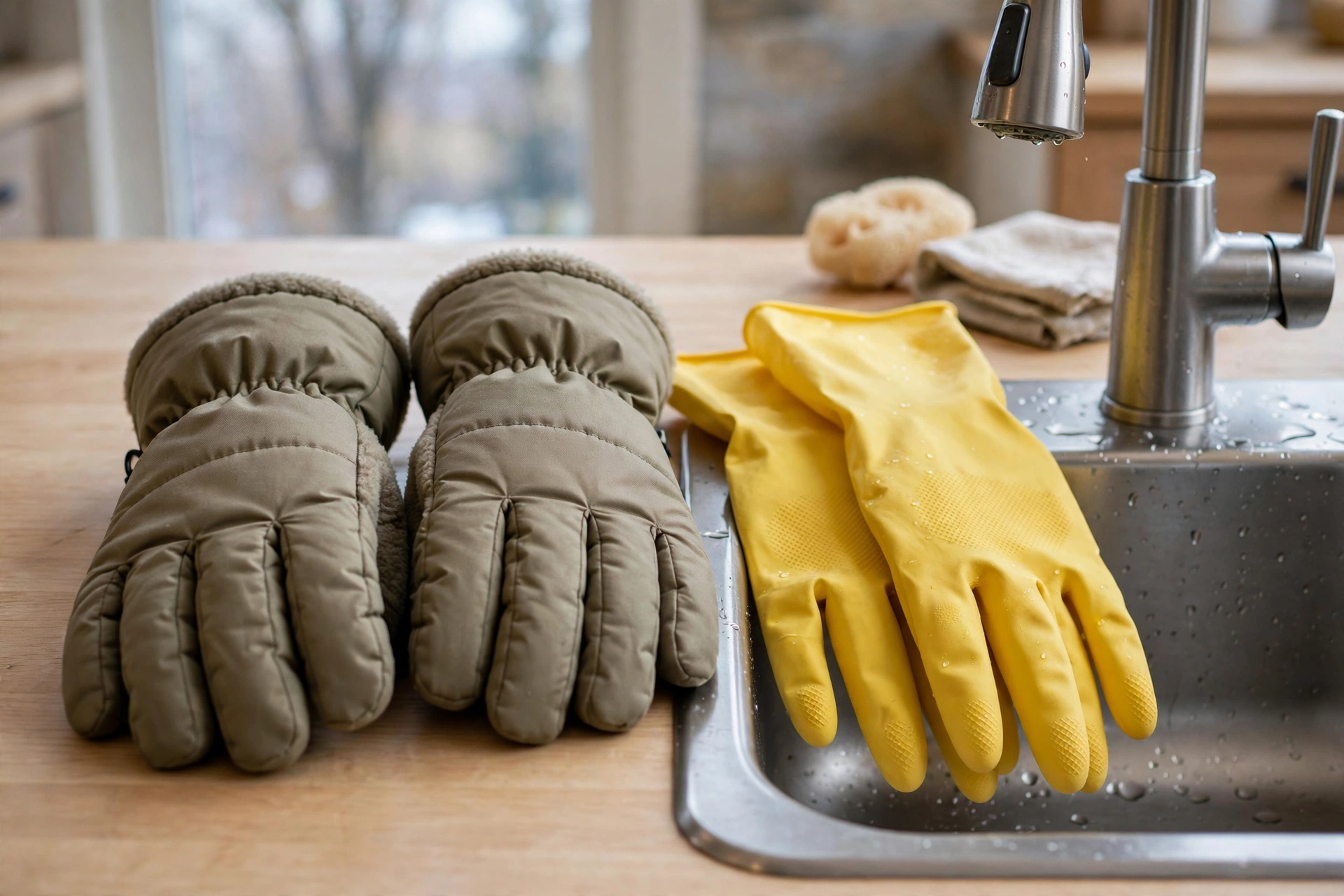
Winter Tip: Keep warm gloves by the door and rubber gloves by the kitchen sink.
Idea 9: Keep Hand Cream Where You Actually Use It
The best hand cream in the world will not help if it lives in a drawer you never open. Winter hand care works best when cream is within reach at the moments you need it most. Keep a tube by the bathroom sink and one by the kitchen sink. Keep one in your bag or coat pocket, and one on your desk or bedside table.
This is not about using more product. It is about removing friction. When cream is right there, a quick application after washing becomes automatic instead of a chore you keep meaning to do. Small tubes travel well, and having a few around the house means you are never far from a little relief.

Winter Tip: Keep a tube of cream everywhere you wash your hands. Reach beats willpower.
Idea 10: Be Gentler with Hand Sanitizer
Hand sanitizer is handy in winter, especially during cold and flu season. But alcohol-based formulas can be very drying when used again and again. When soap and water are available, washing with a gentle cleanser is usually the kinder option for dry hands. When you do need sanitizer, choose a moisturizing formula if you can, and use only as much as you need.
Once the sanitizer has dried, follow it with a little hand cream. That simple pairing, sanitize then moisturize, keeps your hands clean without letting dryness build up all day. It is an easy habit to add to your routine, and your knuckles will notice the difference.

Winter Tip: Wash with a gentle cleanser when you can. Save sanitizer for when soap is not handy.
Idea 11: Do Not Forget Sun Protection on the Backs of Your Hands
Winter sun is easy to forget. The days are short, the sky is often gray, and sunscreen feels like a summer habit. But the backs of your hands are exposed almost every time you step outside. Winter sun still reaches them, especially glare bouncing off snow. Over time, that exposure can add to dryness and leave skin looking weathered.
A hand cream with sun protection is a simple fix. Or smooth a little sunscreen over the backs of your hands before you head out. Apply it along with your morning cream, and reapply if you spend a long time outdoors. It is one of those small steps that is easy to skip and easy to be glad you remembered.

Winter Tip: Smooth sunscreen over the backs of your hands each morning. Snow glare counts.
Idea 12: Try a Soak-and-Seal Reset for Cracked Knuckles
When knuckles are already cracked and sore, everyday cream sometimes is not enough on its own. A simple soak-and-seal reset can help soften the skin first. Soak your hands in lukewarm water for about five minutes. Use no soap and no scrubbing. Then pat them dry gently, leaving them slightly damp.
Next, apply a thick layer of plain balm or petroleum jelly directly over the cracked spots. Cover your hands with cotton gloves or soft socks for twenty to thirty minutes. The warmth and cover help the balm stay in place while the skin softens. Try this a few evenings in a row when your hands feel at their worst. If cracks are deep or bleeding, ask a dermatologist for advice. The same applies if gentle care has not helped after a couple of weeks.
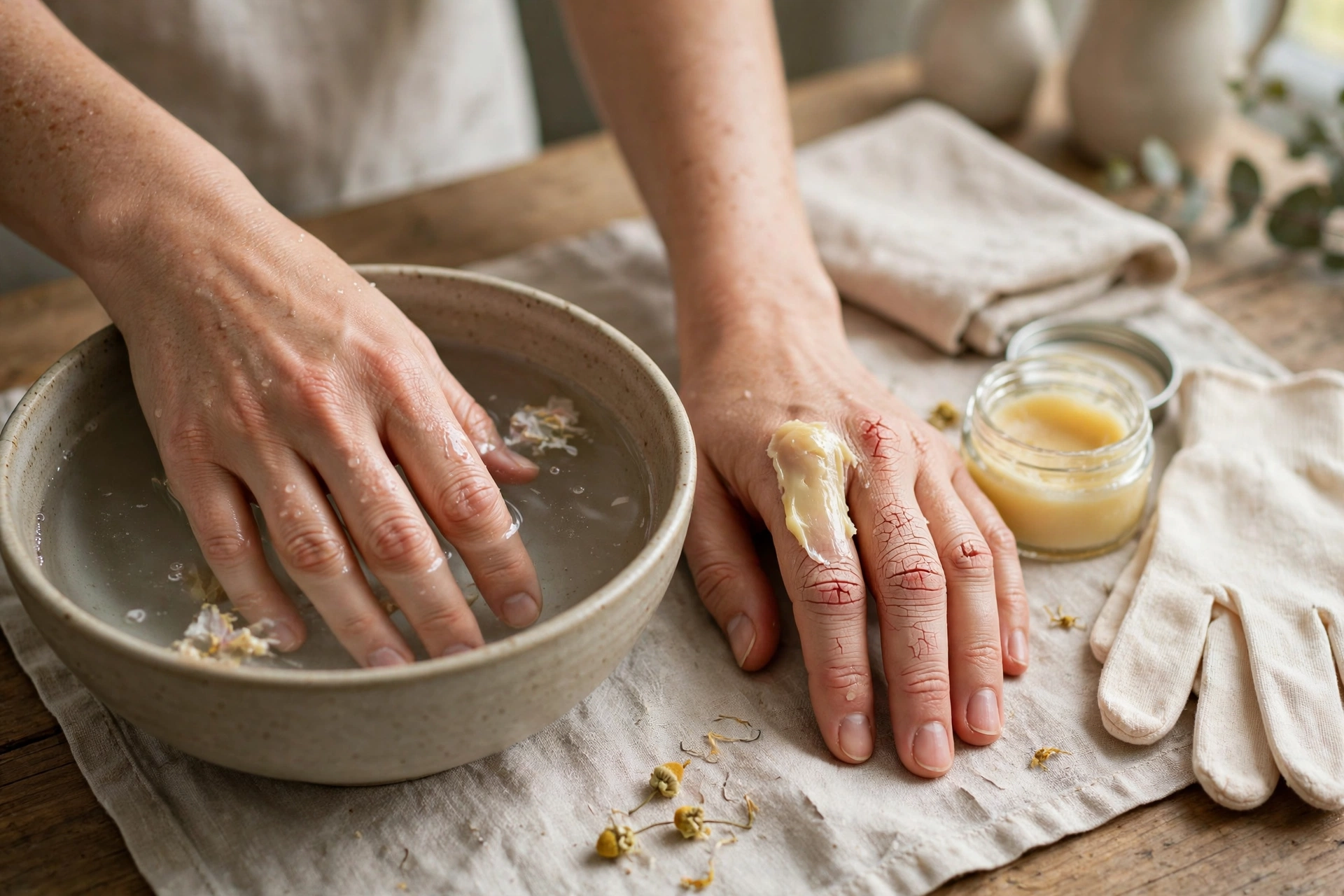
Winter Tip: For cracked knuckles, soak, seal with balm, and cover for twenty to thirty minutes.
Tips for Softer Winter Hands
- Start before your hands feel dry. Begin your winter routine when the weather first turns cold, not after cracks appear.
- Reapply little and often. A small amount of cream several times a day usually works better than one heavy application.
- Pat, do not rub. Pat hands dry with a soft towel after washing, and let cream sink in for a few seconds before grabbing your phone or keys.
- Warm hands gradually. Let cold hands warm up slowly indoors instead of plunging them straight into very hot water.
- Add moisture to the air. If your home feels very dry, a humidifier in the bedroom can help your hands, and your skin in general, feel less tight overnight.
- Patch-test anything new. Try a new cream or balm on a small area first, especially if your skin is sensitive or easily irritated.
Cream Where You Can Reach It Is the Whole Routine
This routine has no hard steps. The only part that needs real thought is keeping cream where your hands already are. Put it by the sink, in your bag, and on your nightstand. Once the cream is within reach, the rest happens on its own.
If you take one idea from this list, take that one. A tube of cream in the right place does more for winter hands than a shelf full of products in a drawer.
FAQ
How often should I moisturize my hands in winter?
As often as they feel dry is a good rule of thumb. For most people, that means after every wash and a few extra times during the day. A small amount several times a day usually keeps hands more comfortable than one heavy application in the morning alone.
Why do my hands get so dry in winter?
Cold air holds less moisture than warm air. Indoor heating dries the air further, and frequent hand washing removes natural oils from the skin. Hands also have thinner skin and fewer oil glands than many other parts of the body. That is why they tend to show dryness first.
Is hand cream or lotion better for dry winter hands?
A thick cream is usually the better choice in winter. It stays on the skin longer and forms a more protective layer than a thin lotion. A light lotion can still work for slightly dry hands during the day. But rough or cracked hands generally feel better with a richer cream or balm.
Can I use the overnight glove treatment every night?
You can, if it feels comfortable, but most people do not need to. Two or three nights a week is usually enough, especially when your hands are at their driest. If the gloves bother you while you sleep, try wearing them for an hour in the evening instead.
When should I see a dermatologist about dry hands?
If your hands are cracked and bleeding, very painful, or red and itchy, ask a dermatologist for advice. The same applies if gentle, regular care has not helped after a couple of weeks. This article shares general care information only. It is not a substitute for medical advice.
Conclusion
Winter hands do not need a complicated routine. They need a consistent one. Wash gently with lukewarm water, moisturize while your hands are still slightly damp, and choose a cream rich enough for cold weather. Protect your hands with gloves whenever you head outside or tackle the dishes. Add the overnight treatment and a little cuticle care, and you have a routine that fits into real life.
Pick two or three ideas from this list to start with this week. Keep your cream where you can actually reach it. Small, steady habits are what carry your hands through the coldest months. They keep your hands soft, comfortable, and ready for whatever winter brings.
Pingback: Morning Skincare Routine for Beginners (11 Steps)