
13 Thanksgiving Gratitude Traditions for Family to Share (2026)
Thanksgiving is famous for the meal. The moments people remember most often happen around it. Think of a quiet word before dinner. Think of a story that makes the whole table laugh. Think of a simple thank-you said out loud for the first time in a while. Gratitude does not need a big production. It just needs a little space in the day. It needs a tradition that makes that space feel natural, not forced.
The traditions below are all about people, talk, and time together. Pick one or two that fit your family. Keep them short and warm. Let them grow into a ritual everyone looks forward to year after year.
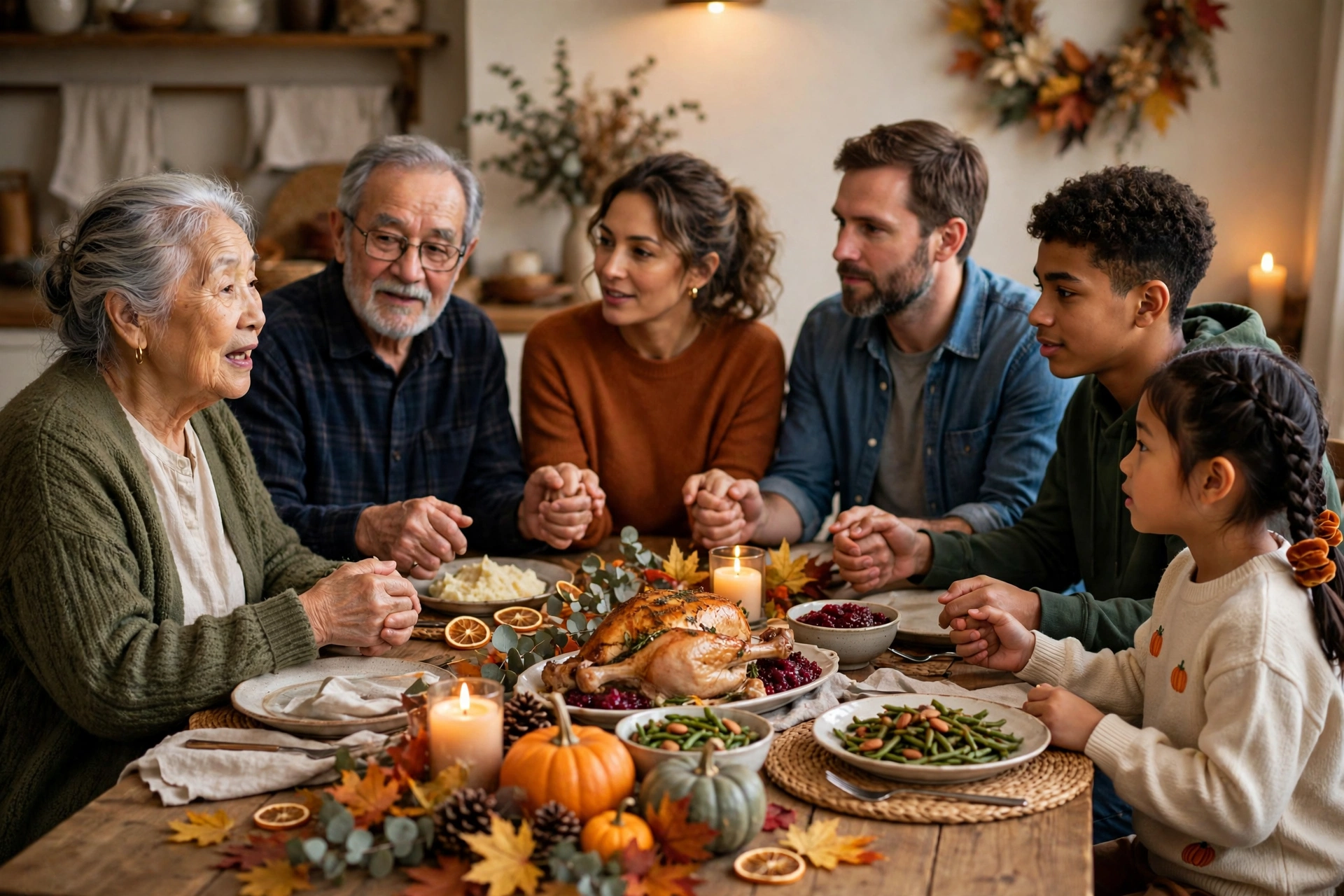
1. Go Around the Table in a Gratitude Circle
Before the meal begins, go around the table. Let each person name one person they are grateful for, and say why. Keep it to one person, not a long list. One name helps everyone think a little deeper. A child might thank a grandparent for bedtime stories. An adult might thank a sibling for a phone call at just the right time. Let people keep it short. Do not rush anyone who gets a little emotional. This simple circle sets a warm tone for the whole meal. It reminds everyone that gratitude is personal, not a show.
Gratitude Tip: Go first yourself, and keep your answer short, so shy guests feel safe to follow.
2. Let the Host Give a Short Thank-You Toast
A host toast is different from a go-around. One person speaks for the group as a whole. The host can welcome everyone. The host can thank the people who helped make the day happen. The host can name one thing the family is grateful for this year. Keep it to a minute or two. Keep it honest, not formal. A toast works best when it sounds like the person giving it, not like a speech. If hosting feels like a lot, the host can simply say thank you for being here. That is more than enough.

Gratitude Tip: Write down two short lines before dinner, so you do not have to think of the words on the spot.
3. Share a Blessing or a Quiet Moment Before Eating
Many families begin the meal with a blessing, a prayer, or a few seconds of quiet together. The exact words matter less than the pause itself. Hold hands, close your eyes, or sit still for a moment. That pause helps everyone shift from the rush of cooking and travel into the meal itself. If your family holds different beliefs, a short thank-you can work for everyone. Thank the food, the company, and the year. Make it brief. Make it sincere. Then enjoy the meal.
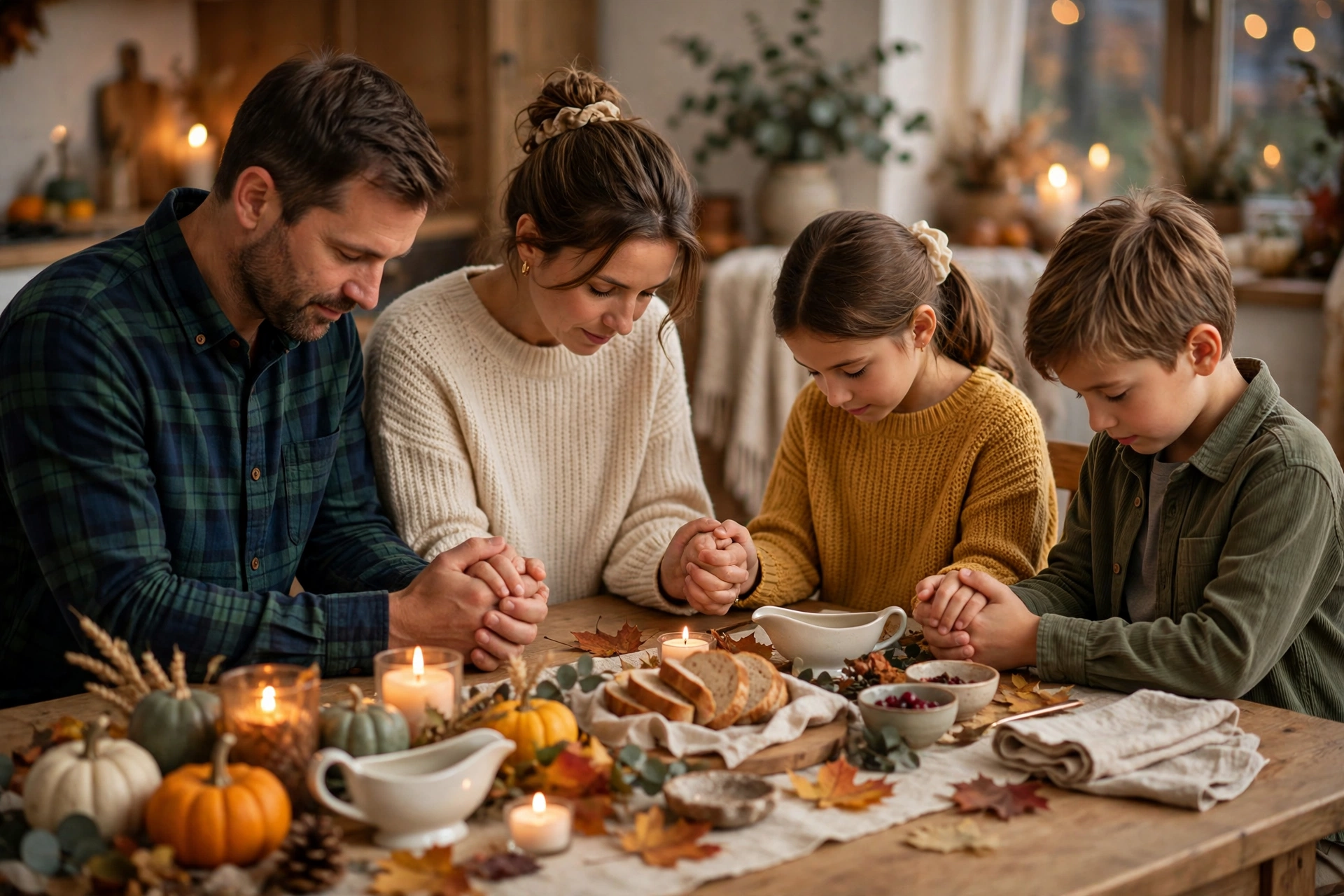
Gratitude Tip: Agree on the words ahead of time, so no one feels put on the spot at the table.
4. Talk About Gratitude Every Night Through November
Thanksgiving gratitude feels easier when it is not squeezed into one day. Through November, try a nightly check-in at dinner. Each person names one good thing from that day. It can be small, like a kind word from a coworker, a sunny afternoon, or a meal that turned out well. Children often find this version easier than the big Thanksgiving question. The day is still fresh in their minds. By the time Thanksgiving arrives, gratitude is already a habit. The table talk feels relaxed, not rehearsed.

Gratitude Tip: Keep the nightly round to one good thing each, so it stays quick enough for busy weeknights.
5. Pass Around a Family Gratitude Journal
Keep one journal that gets passed around the table each Thanksgiving. Every guest writes a line or two about what they are grateful for that year. Then put the journal away, and bring it out again next year. Reading last year’s entries before adding new ones is often the best part. Children notice how much they have grown. Adults recall a year they had almost forgotten. The journal slowly becomes a family record. One shared notebook, used once a year, can carry more meaning than a shelf full of keepsakes.
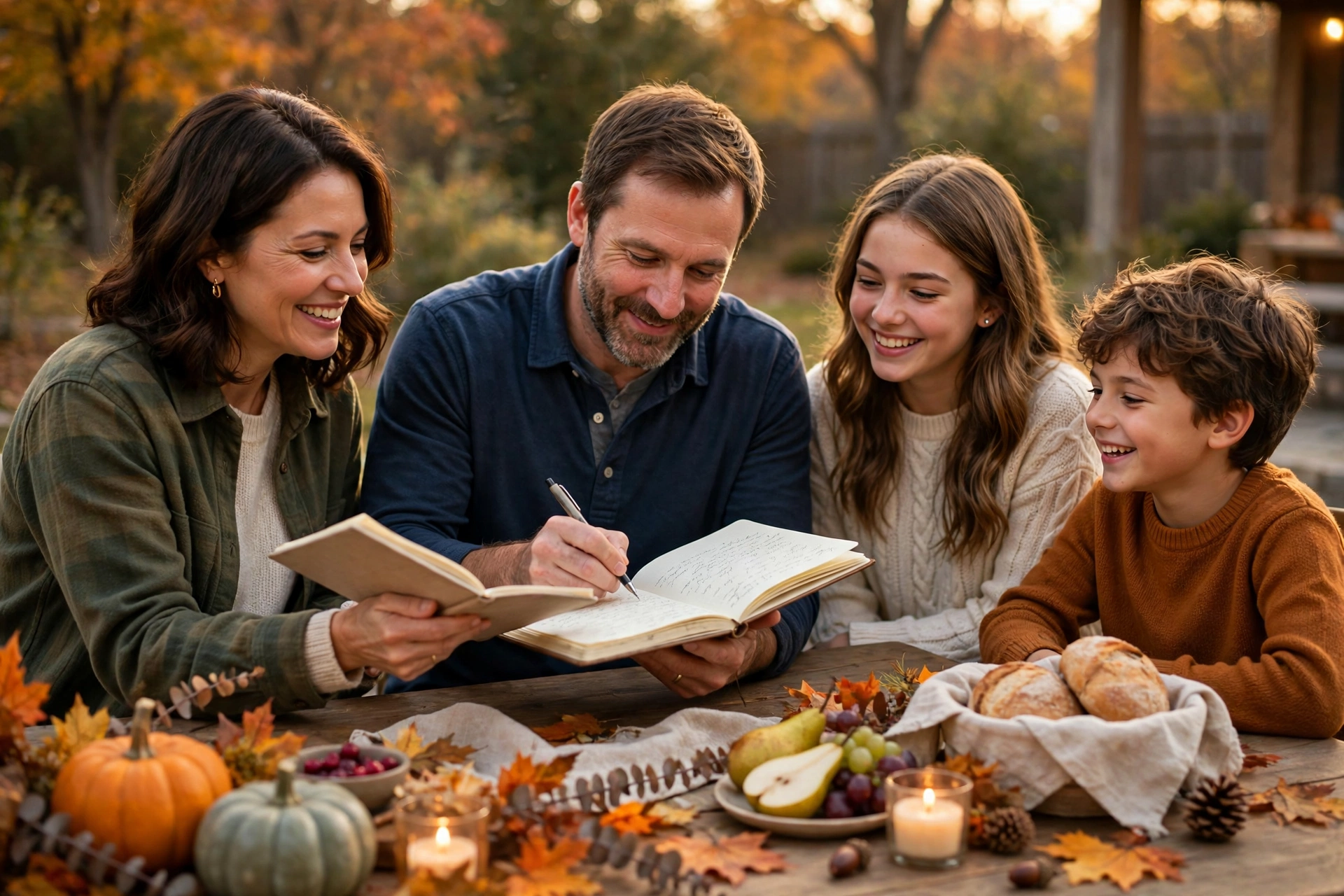
Gratitude Tip: Leave the journal open on the table after dinner, so guests can add a line when they feel ready.
6. Write Thank-You Notes After Dessert
After dessert, when the table is a little quieter, set out pens and plain paper. Invite everyone to write a short thank-you note to someone who is not at the table. It might be a teacher, a neighbor, a friend, or a family member who helped during a hard week. The note does not need to be long. Two or three honest sentences are plenty. Writing by hand slows people down in a good way. The person who gets the note later will recall it far longer than a quick text. If you have stamps on hand, you can mail them the next day.
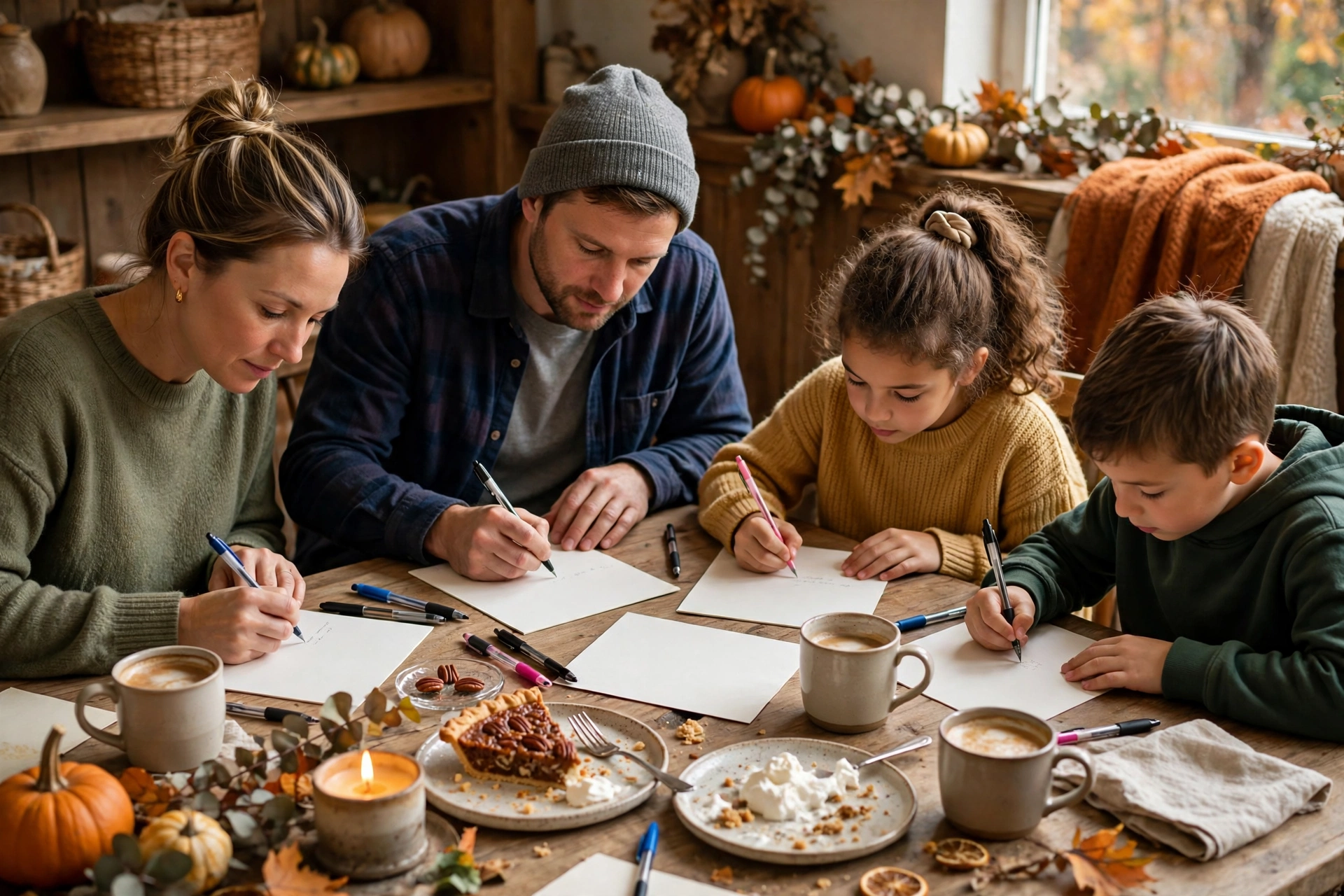
Gratitude Tip: Set out a few extra pens and stamps, so no one has to wait to start writing.
7. Take a Gratitude Walk After Dinner
A short walk after dinner gives gratitude a change of view. Head outside with whoever wants to join. Stroll around the block or through the yard, and let the talk wander. People often open up more easily side by side than face to face across a table. Children who were restless indoors tend to relax outdoors. You can talk about the year, enjoy the crisp air, or simply walk in easy silence. There is no goal and no plan. That is exactly the point: a little unhurried time together after a full day.
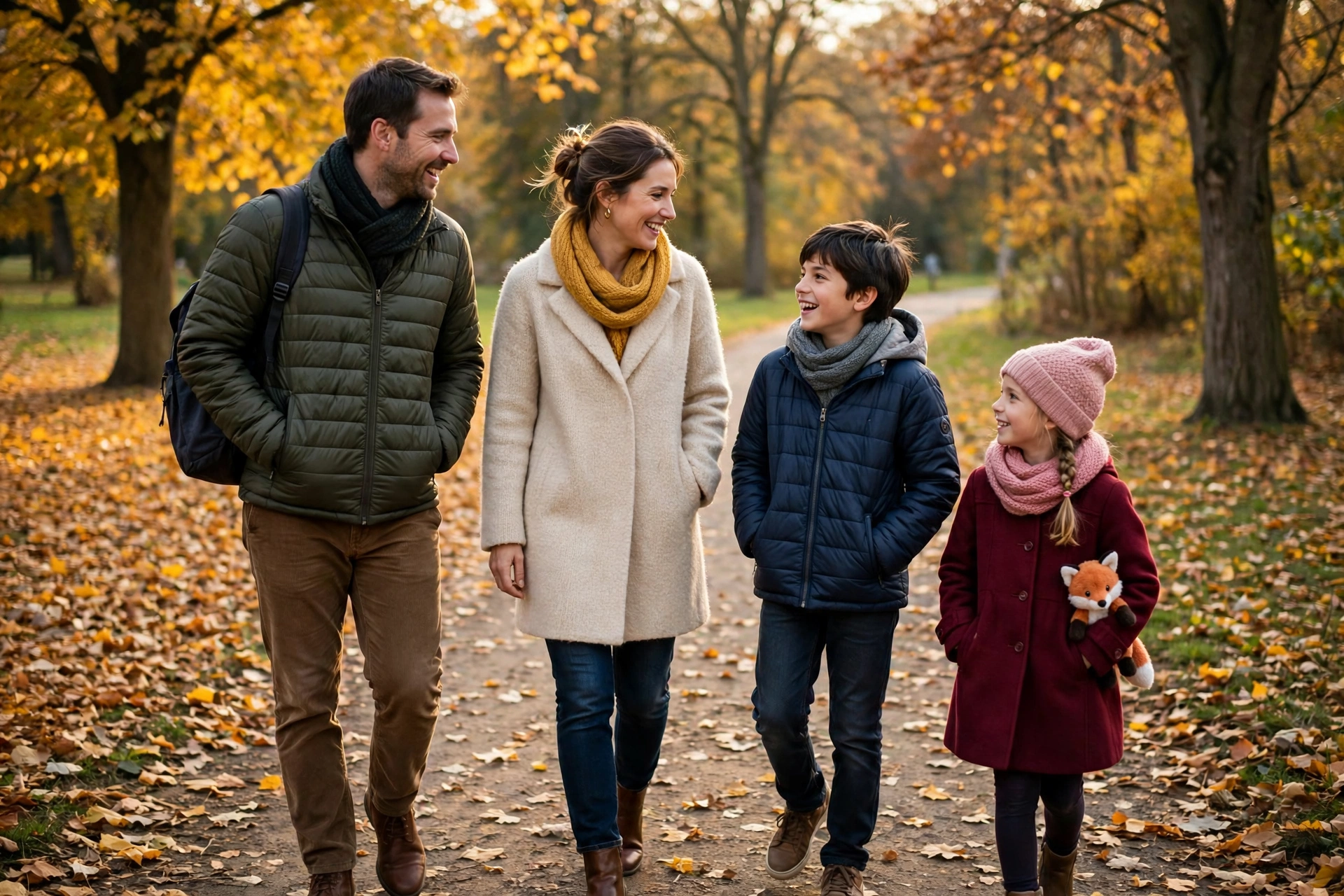
Gratitude Tip: Bring a light jacket for everyone, so a cool evening does not cut the walk short.
8. Call or Video Call Someone Who Could Not Be There
Thanksgiving can feel incomplete when someone you love cannot make it to the table. Make a point of calling or video calling that person during the day. Try to call when the whole group can gather around for a few minutes. Let everyone say hello, share one piece of news, and tell them they are missed. A short, lively group call beats a long, awkward one. Keep it cheerful. Let the person on the other end do plenty of the talking. It is a small gesture. It tells someone far away that they are still part of the family day.

Gratitude Tip: Pick a call time before dinner, and test the video link early so the group is not left waiting.
9. Remember Loved Ones Who Are Missing
Holidays can be bittersweet when someone dear is no longer with us. A gentle tradition is to set aside a few minutes to recall them together. Share a loved memory. Mention something they loved about Thanksgiving. Simply say their name aloud. Keep the tone warm, not heavy. Let people join in or listen quietly, as they prefer. Children gain from hearing stories about grandparents or relatives they may barely recall. Adults often find comfort in knowing the person is still talked about with love. Grief and gratitude can sit at the same table.
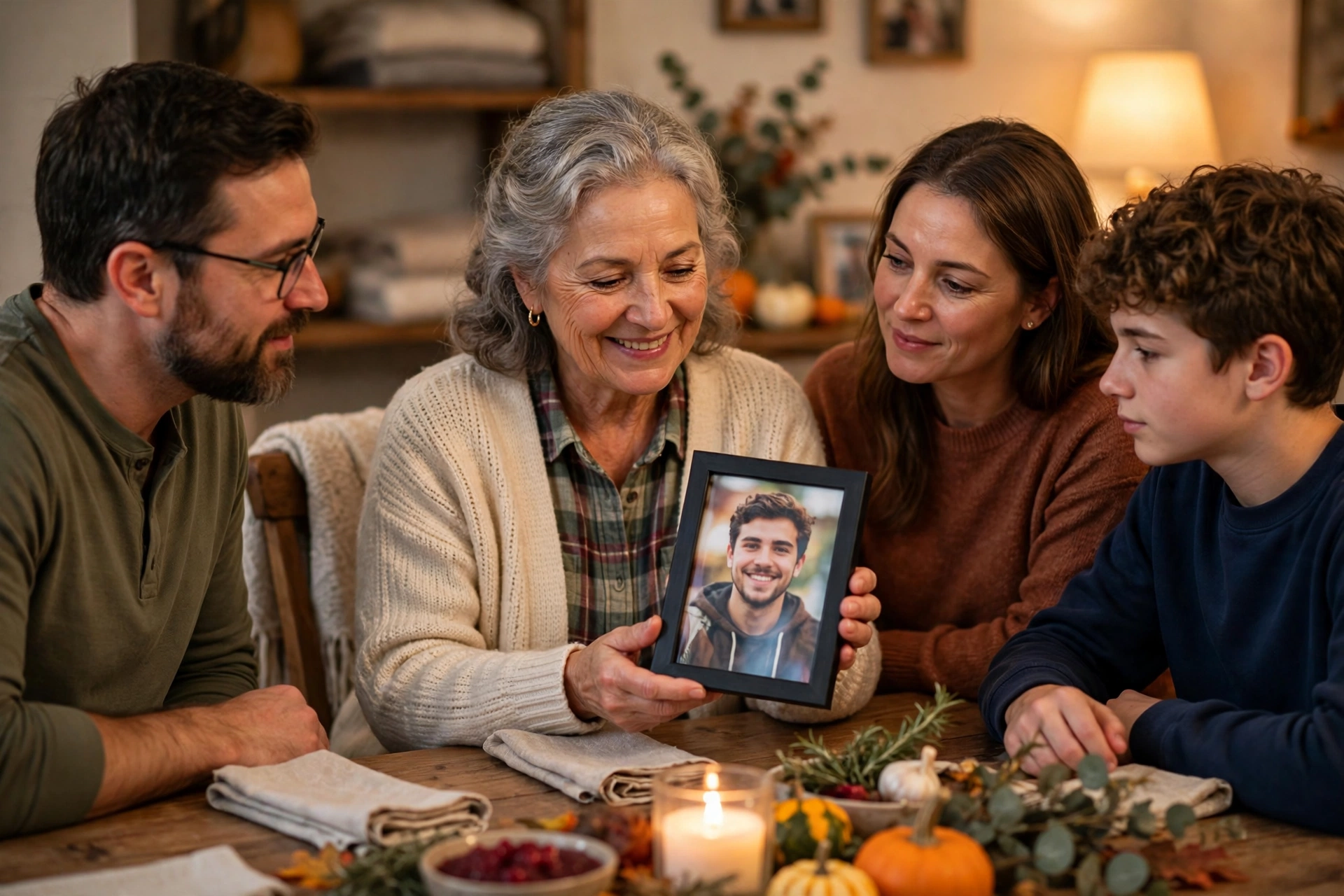
Gratitude Tip: Ask one person to share a short, happy memory first, so others feel safe to join in.
10. Share a Story of Kindness from the Year
Instead of asking everyone what they are thankful for in general, ask for a real story. Ask for a moment this year when someone was kind to you. Ask about a kind act you saw that stayed with you. Stories are easier to tell than vague feelings. They tend to spark more stories. A neighbor who cleared a driveway, a friend who checked in during a hard month, or a stranger who helped with a flat tire can all become the heart of the evening. This tradition turns gratitude into something real. It often leaves the table feeling closer than a list of blessings ever could.

Gratitude Tip: Start with your own short story, so the group sees how simple the prompt can be.
11. Look Back on the Year Together
After dinner, try a simple year-in-review round with three prompts. Name a loved moment from the year. Name a hard moment you got through. Name something you are looking forward to. The mix matters. Praising only the good parts can feel shallow. Naming a hard moment honestly, and the help that carried you through it, makes gratitude feel real. Keep answers short. Do not turn it into a debate or a planning meeting. This talk works well in the living room, with everyone settled in. It gives the evening a thoughtful close before people start heading home.
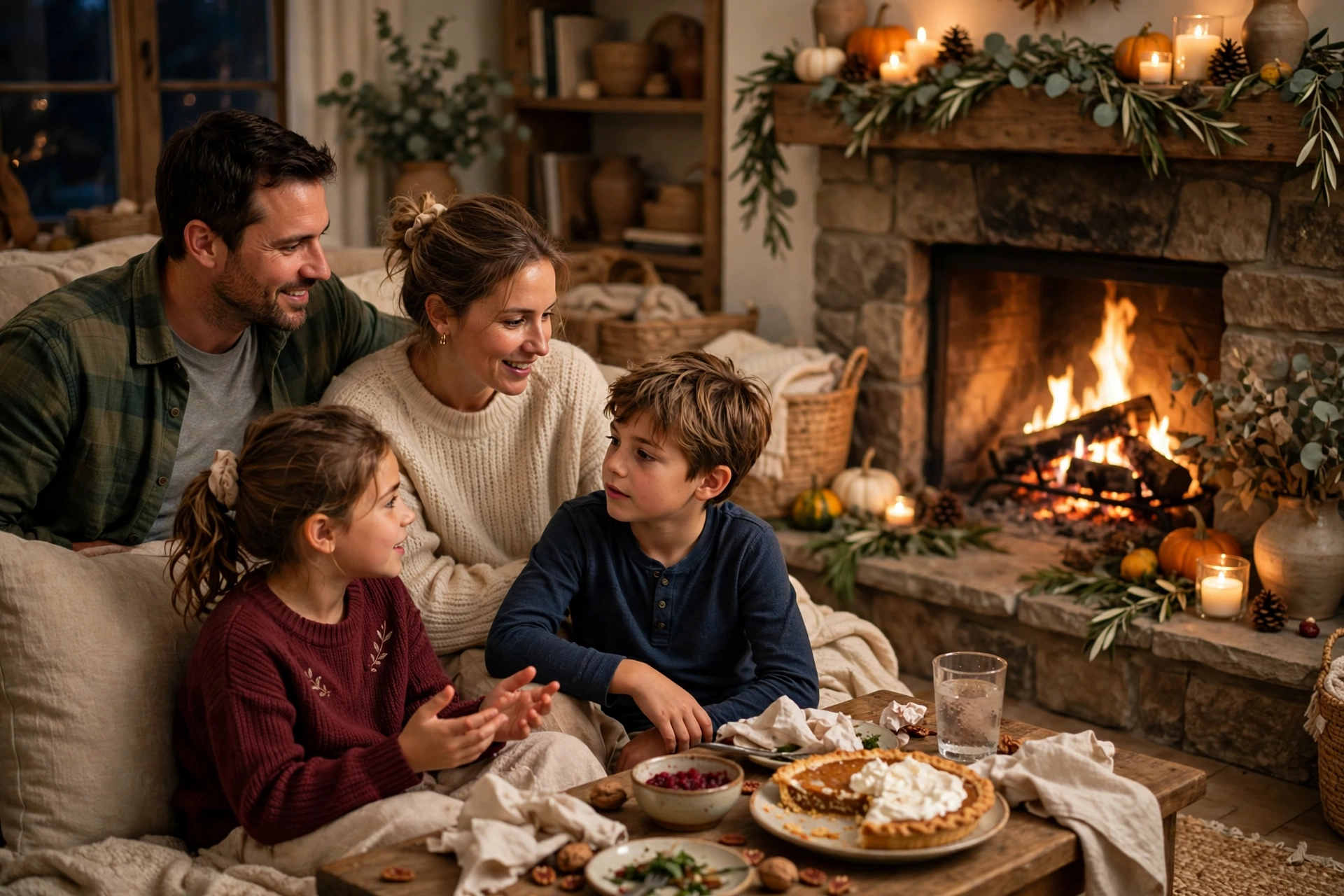
Gratitude Tip: Set a one-minute limit per person, so the round stays warm and does not drag on.
12. Give Back Together Before the Feast
One of the most grounding Thanksgiving traditions is to spend part of the day helping others. Volunteer at a community kitchen. Pack donation boxes. Deliver a meal to a neighbor. Give to a cause your family cares about. Doing it together, above all with children, shows gratitude in action, not just in words. It does not need to take the whole day. Even an hour or two in the morning can change how the rest of the day feels. Choose something real for your family. Let the act itself, not a photo or a report, be the point.

Gratitude Tip: Book the volunteer slot a week ahead, since holiday shifts fill up fast.
13. Thank the People Behind the Day by Name
Thanksgiving days run on quiet work. Someone cooked, someone cleaned, someone drove a long way, someone watched the kids, and someone stayed late to wash up. Before the evening ends, take a moment to thank those people by name, one by one, for what they did. Real thanks land much harder than a broad thank you to everyone. You might thank the host, the person who brought an extra chair when the table got crowded, or the teen who helped clear plates without being asked. Naming the help makes people feel seen. It teaches children to notice effort, not just results.

Gratitude Tip: Thank the helpers before dessert, while everyone is still at the table.
Tips for Starting a New Gratitude Tradition
Start with just one tradition, not all thirteen. A short ritual that everyone enjoys will come back next year. A long plan that feels like homework will not. Keep each moment brief, above all with children in the room. Let people pass if they are not ready to share. The host can go first to show that short and honest is perfect. If a tradition falls flat one year, that is fine too. Try a new one next year, or change the time. The best Thanksgiving gratitude traditions are the ones your family looks forward to, not the ones that sound best on paper.
It also helps to build gratitude into the flow of the day, not as a separate event. A circle before the meal, a walk after dinner, or a call during a quiet moment all fit into a full day. Keep phones away during the sharing moments. Recall that gratitude grows when it is repeated. One year makes a nice memory. Three years make a tradition.
Let One Small Ritual Carry the Whole Month
The strongest traditions in this list share one trait: they are small enough to repeat. A nightly check-in in November, a journal that comes out once a year, or a walk after dinner all ask for minutes, not hours. That is why they last. Pick the one your family already likes, and give it the same slot each year.
If the first try feels stiff, change the time, not the idea. Move the circle to after dinner, move the walk to before dessert, or move the notes to the living room. A tradition earns its place by fitting your family, not by looking perfect. Keep the one that fits, and let the rest go.
Frequently Asked Questions
How many gratitude traditions should a family start at once?
Start with one. Pick the tradition that feels most natural for your family. Try it this Thanksgiving. Add another next year only if the first one stuck. A single warm moment beats a long list that everyone dreads.
What if someone does not want to share out loud?
Let them pass without comment. Some people show gratitude better in writing, in a quiet talk, or by helping out. All of those count. You can offer a written choice, like the pass-around journal or a thank-you note, so no one feels put on the spot.
How can we include children in gratitude traditions?
Keep prompts small and real. Ask about a good thing from today, a person who helped them, or a loved moment from the week. Let children answer in a sentence. They can draw their answer if they prefer. They can simply listen for a year, and join in when they are ready.
How do we include family members who cannot attend?
A group call or video call during the day works well. A handwritten thank-you note sent after also works. You can also read a message from them aloud at the table. Their voice stays part of the day, even from far away.
Can gratitude traditions work for a small Thanksgiving?
Yes, and at times they work even better. With a small group, a gratitude circle, a shared blessing, or a year-in-review talk feels close, not formal. The size of the table does not matter. The care you give each other does.
Conclusion
Thanksgiving gratitude traditions do not need to be fancy to mean a lot. A circle around the table, a short toast, a walk after dinner, or a thank-you said by name can turn a plain holiday into a day your family recalls. Choose one tradition. Keep it short and sincere. Give it a chance to grow.