
12 Medium Length Hairstyles for Thick Hair That Remove Bulk Without Losing Fullness (2026)
Thick hair is a wonderful thing to have. But a medium-length cut can start to feel heavy, wide, and hard to manage. If your hair flares out at the ends, the problem is rarely the length. The same goes for a triangle shape by the afternoon or hair that takes forever to dry. It is usually weight sitting in the wrong places. Too much bulk sits at the sides, and too much density sits underneath. Not enough shape guides all that hair where it should go.
That is why medium length is such a sweet spot for thick hair. It keeps enough weight to stop your hair from puffing outward. Yet it is short enough to style in minutes and light enough to move. The trick is choosing a cut that removes weight from the inside, not just from the ends. These 12 medium length hairstyles for thick hair all do exactly that. They use interior layers, thinning, texturizing, and clever shaping. Dense hair feels lighter, while you keep the fullness you love.
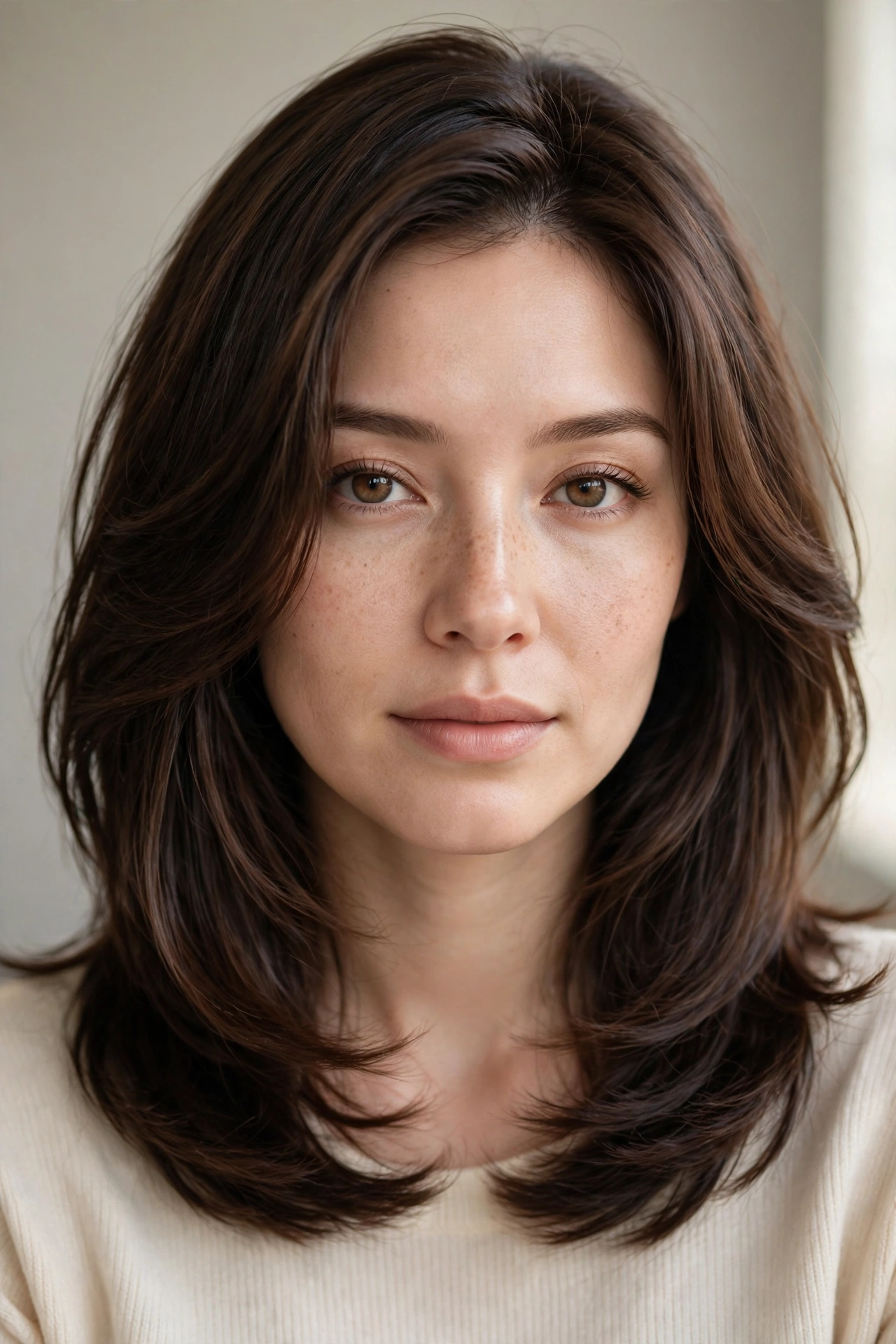
Table of Contents
1. Invisible-Layer Collarbone Lob | 2. Ghost Layers That Thin Without Visible Steps | 3. Blunt Lob With Hidden Underlayer Thinning | 4. Long Layers Starting Below the Chin | 5. Medium Shag Cut for Thick Hair | 6. Butterfly Cut Adapted for Thick Hair | 7. U-Cut With Point-Cut Ends | 8. V-Cut Back That Pulls Weight Away From the Sides | 9. Thick Curtain Bangs Blended Into Layers | 10. Controlled-Volume Cut for Thick Wavy Hair | 11. Layered Cut for Thick Curly Hair | 12. Graduated Rounded Perimeter Cut
1. Invisible-Layer Collarbone Lob
The invisible-layer lob is the safest all-rounder for thick hair, and for good reason. The cut sits right at the collarbone. The layers are worked into the interior of the hair, underneath the smooth top layer. From the outside, your hair looks sleek and full. From the inside, a surprising amount of bulk is simply gone. So the shape swings instead of sitting like a heavy block.
This is the cut to ask for if your hair tends to widen into a triangle. Because the layers never break the surface, there are no visible steps and no choppy lines. The result is just movement. It grows out gracefully too, which means fewer emergency trims between appointments.
Ask your stylist for: long interior layers that stay hidden under the top section. Keep a strong, clean perimeter at the collarbone.
Styling Tip: Blow-dry the top layer smooth and let the hidden layers do the thinning. The shape swings on its own.
2. Ghost Layers That Thin Without Visible Steps
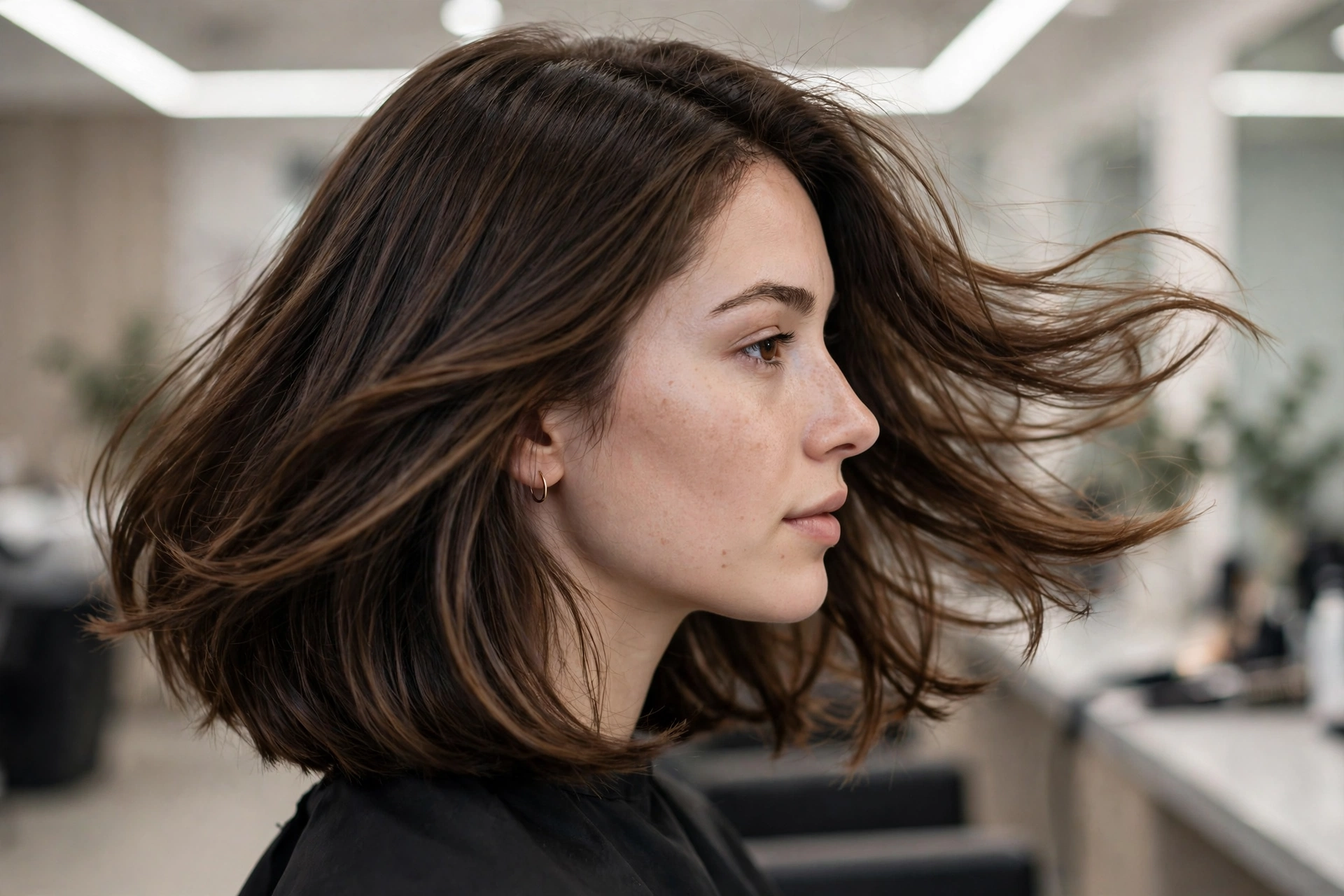
Ghost layers are one of the cleverest weight-removal tricks for very dense hair. They are cut very finely and placed throughout the interior. So they are almost invisible to the eye. Hence the name. You get all the lightness and movement of a layered cut. You avoid the choppy, piecey look that short layers can create on thick hair.
Love the look of one-length hair but hate how heavy it feels? Ghost layers are your answer. They let thick hair lie flatter at the sides and fall more softly around the shoulders. The outline stays full and healthy-looking.
Ask your stylist for: fine, blended ghost layers through the interior only. Keep the surface smooth and the ends strong.
Styling Tip: Wear it smooth and straight to show off the flat, light finish. No extra styling is needed.
3. Blunt Lob With Hidden Underlayer Thinning
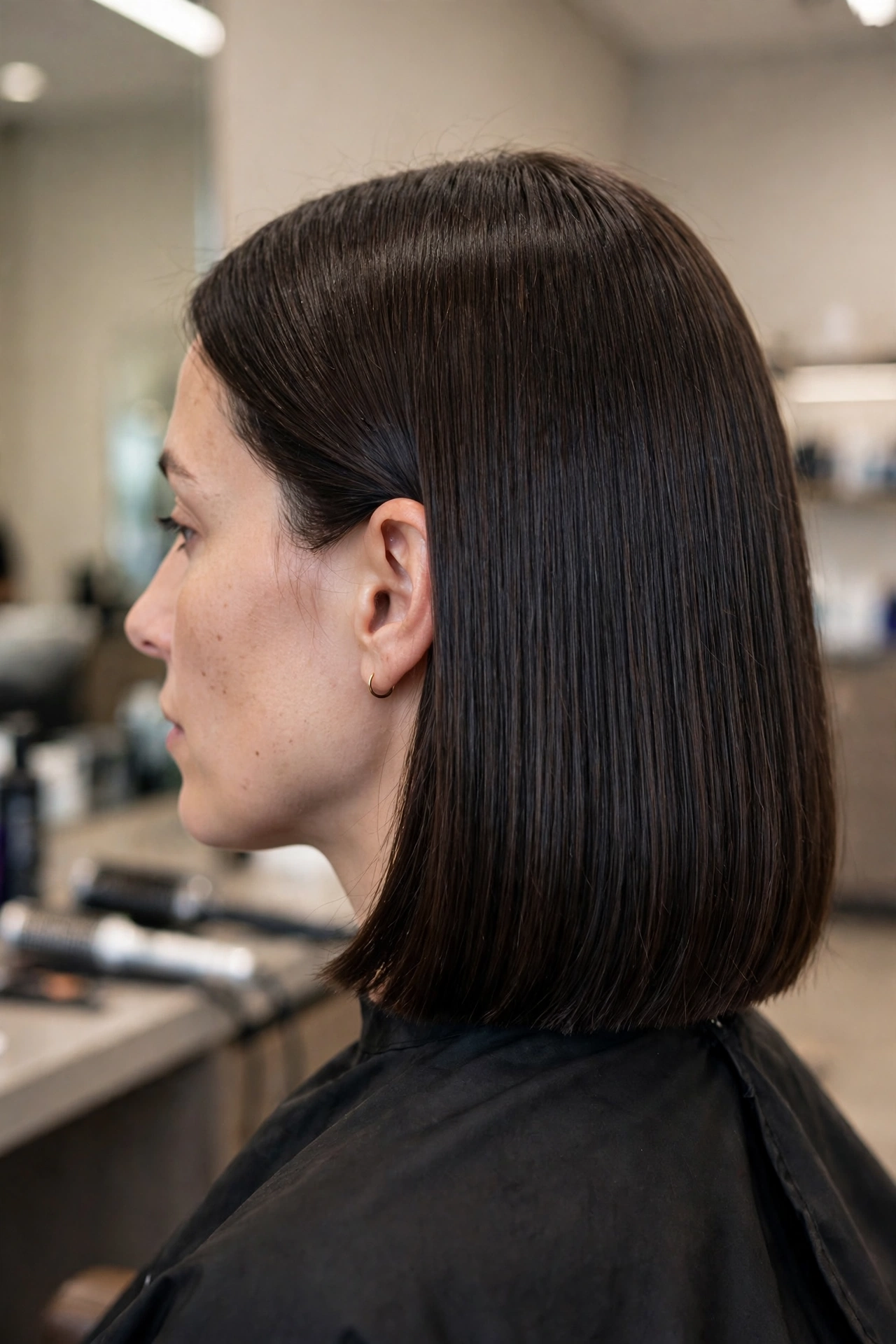
Love a sharp, polished outline but hate the bulk that comes with it? This lob keeps a crisp, blunt perimeter at or just above the collarbone. The underlayer, the hair nobody sees, is quietly thinned out underneath. From the outside it reads sleek and expensive. From the inside, much of the weight is gone.
This works especially well on thick, straight hair, where visible layers can sometimes create frizz or flyaways. The blunt edge gives the cut its shape, and the hidden thinning does the heavy lifting. It is also a wonderfully low-maintenance choice: the strong outline holds its shape as it grows.
Ask your stylist for: a blunt cut with hidden interior thinning. Ask for shears rather than a razor, so the surface stays smooth.
Styling Tip: Keep the perimeter crisp with a smooth blow-dry. The hidden thinning keeps the bulk out.
4. Long Layers Starting Below the Chin
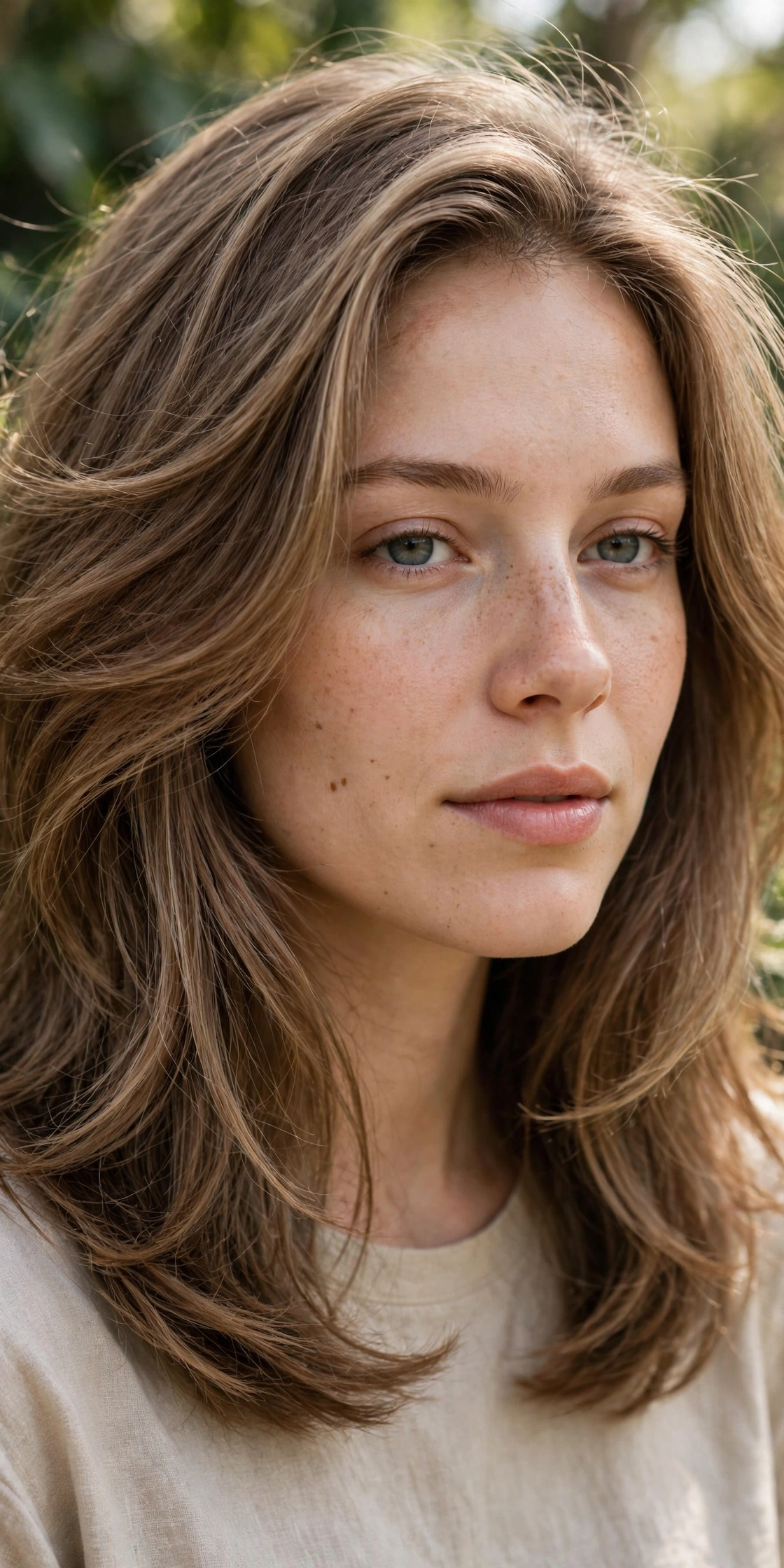
Where your layers start matters just as much as how many you have. Layers that begin below the chin remove weight gradually, from the mid-lengths down. They do not remove it all at once at the crown. That gentle, gradual removal is exactly what thick hair needs. It avoids the poofy-on-top, heavy-at-the-bottom imbalance that short, stacked layers can create on dense hair.
This cut keeps your length and your fullness, but the hair moves more freely and dries faster. It suits straight, wavy, and lightly curly thick hair alike. It is one of the easiest layered cuts to style at home. A quick blow-dry or a little air-drying is often all it needs.
Ask your stylist for: long layers that start below the chin and stay blended. Never stack them short at the crown.
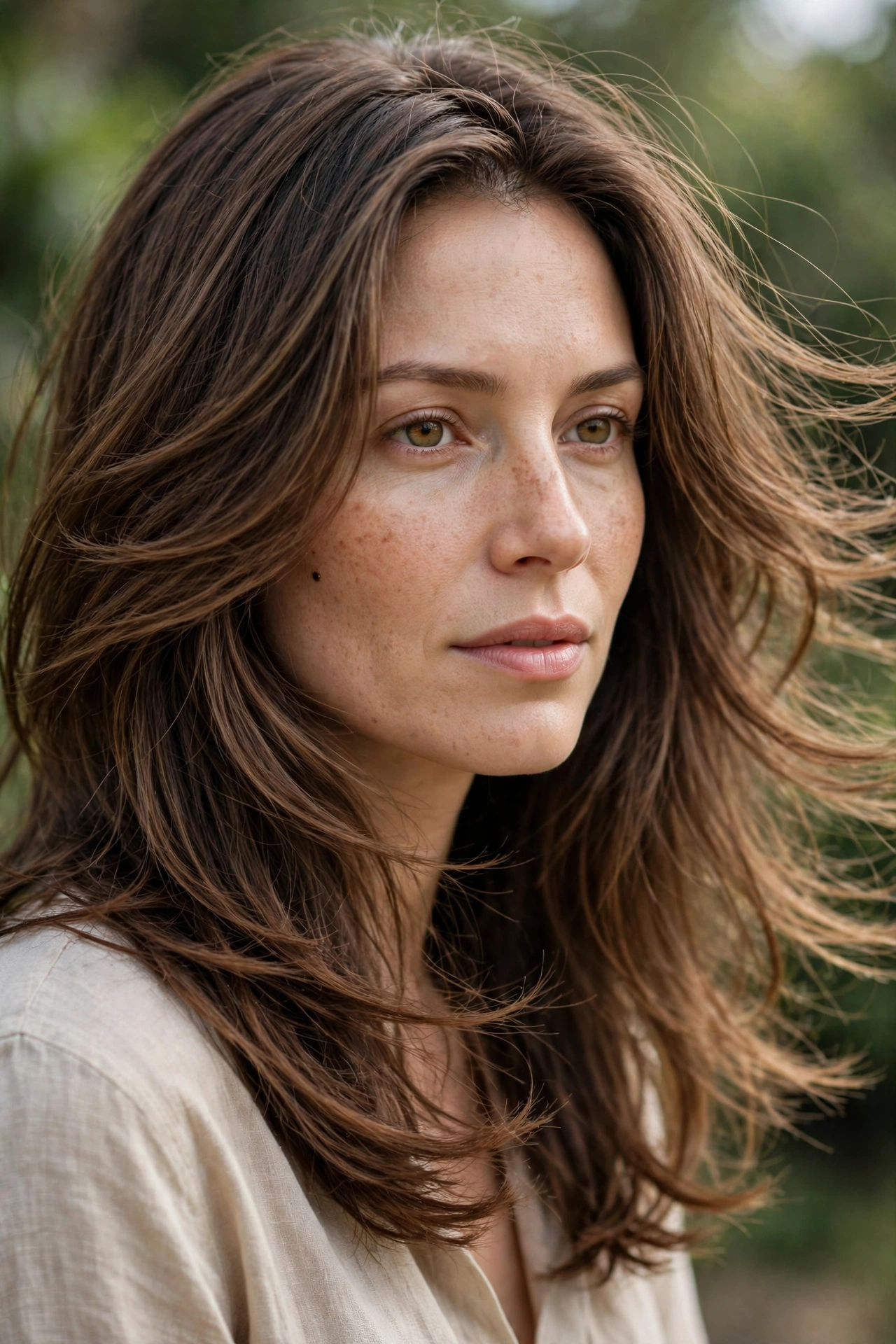
Styling Tip: Air-dry or blow-dry quickly. The long layers fall into place with little effort.
5. Medium Shag Cut for Thick Hair
A shag is a debulking machine. Its layered structure is designed to break up density from the crown through the mid-lengths. So thick hair stops sitting in one solid mass. It starts moving in soft, lived-in pieces. For very dense hair, the shag is often cut a little heavier than a typical shag. So the layers remove weight without turning into frizz.
This is the cut for you if you like texture and do not want to spend long styling. The layers do most of the work. Scrunch in a little styling cream, let it air-dry, and the shape is already there. It is playful and modern. It is one of the best ways to make a lot of hair feel like less hair.
Ask your stylist for: a medium shag with layers through the crown and mid-lengths. Cut it slightly heavier than usual so thick hair stays controlled.

Styling Tip: Scrunch a little styling cream into damp hair and let it air-dry. The layers shape the look.
6. Butterfly Cut Adapted for Thick Hair
The butterfly cut pairs short, face-framing layers on top, the wings, with longer layers through the bottom. On thick hair, that structure is genuinely useful. The short front layers lift weight away from the face. The longer layers underneath thin out the bulk from the mid-shaft to the ends. The result is dramatic volume that still feels light.
This is one of the few viral cuts that truly suits dense hair rather than needing heavy adaptation. The key is keeping the top layers blended into the rest of the cut. Then the wings soften into the longer hair instead of sitting apart from it.
Ask your stylist for: a butterfly cut with face-framing layers blended into long, thinned bottom layers. Keep the volume soft, not poufy.
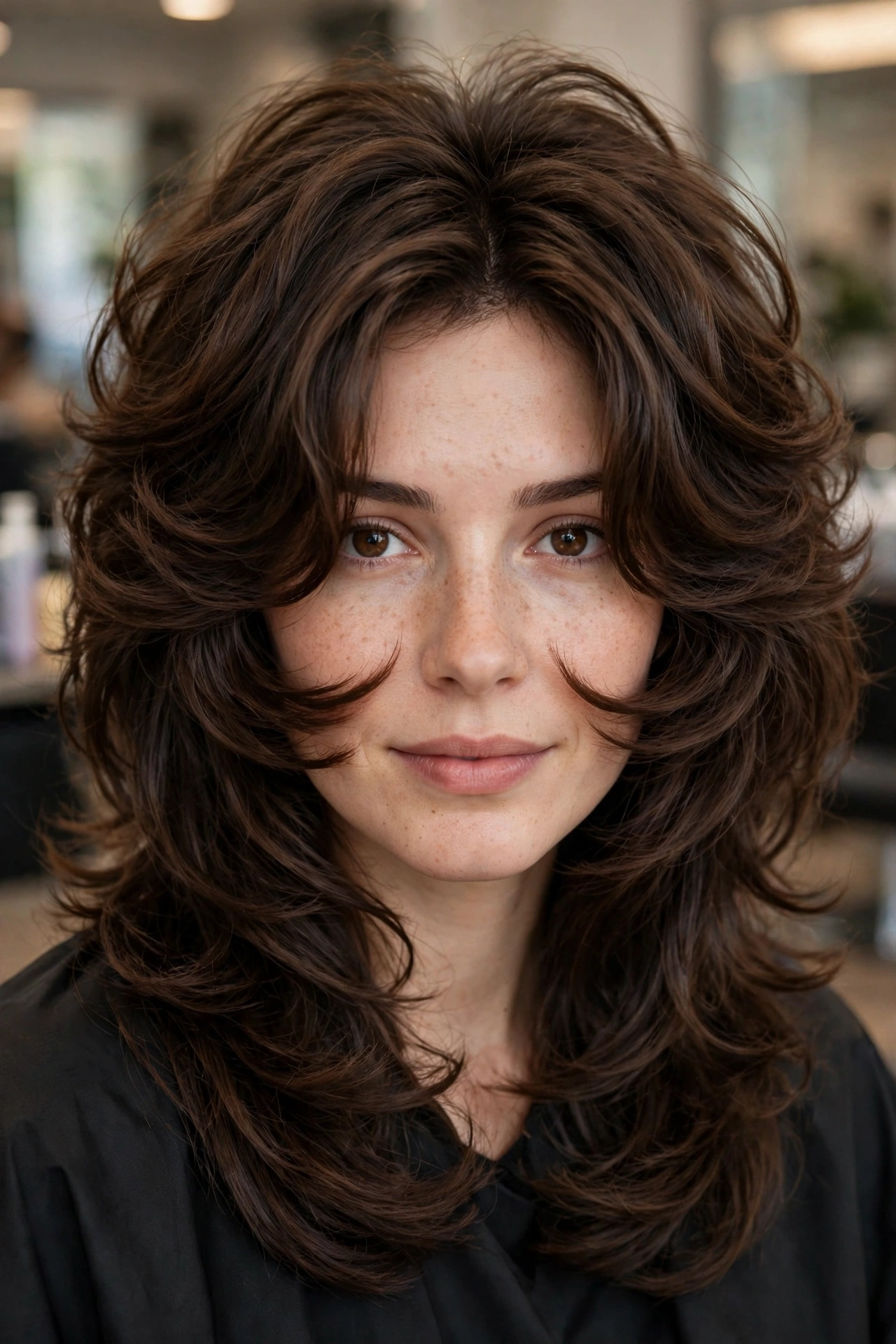
Styling Tip: Blow-dry the face-framing layers away from your face. The wings stay soft and blended.
7. U-Cut With Point-Cut Ends
A U-cut shapes the back of the hair into a gentle U. The sides sit slightly shorter than the center. For thick hair, that curve does two helpful things. It removes weight from the sides, where dense hair feels heaviest. It keeps the center full, so you never lose the length or the fullness you love. Point-cutting the ends then softens the bottom edge. So the hair falls in a light, feathery line instead of a heavy shelf.
This is a lovely choice if your main complaint is heaviness rather than width. The shape is subtle from the front. It simply looks like healthy, medium-length hair. But from the back, the U-shape and the lightened ends make all the difference.
Ask your stylist for: a soft U-shape at the back with point-cut ends, keeping the front length intact.
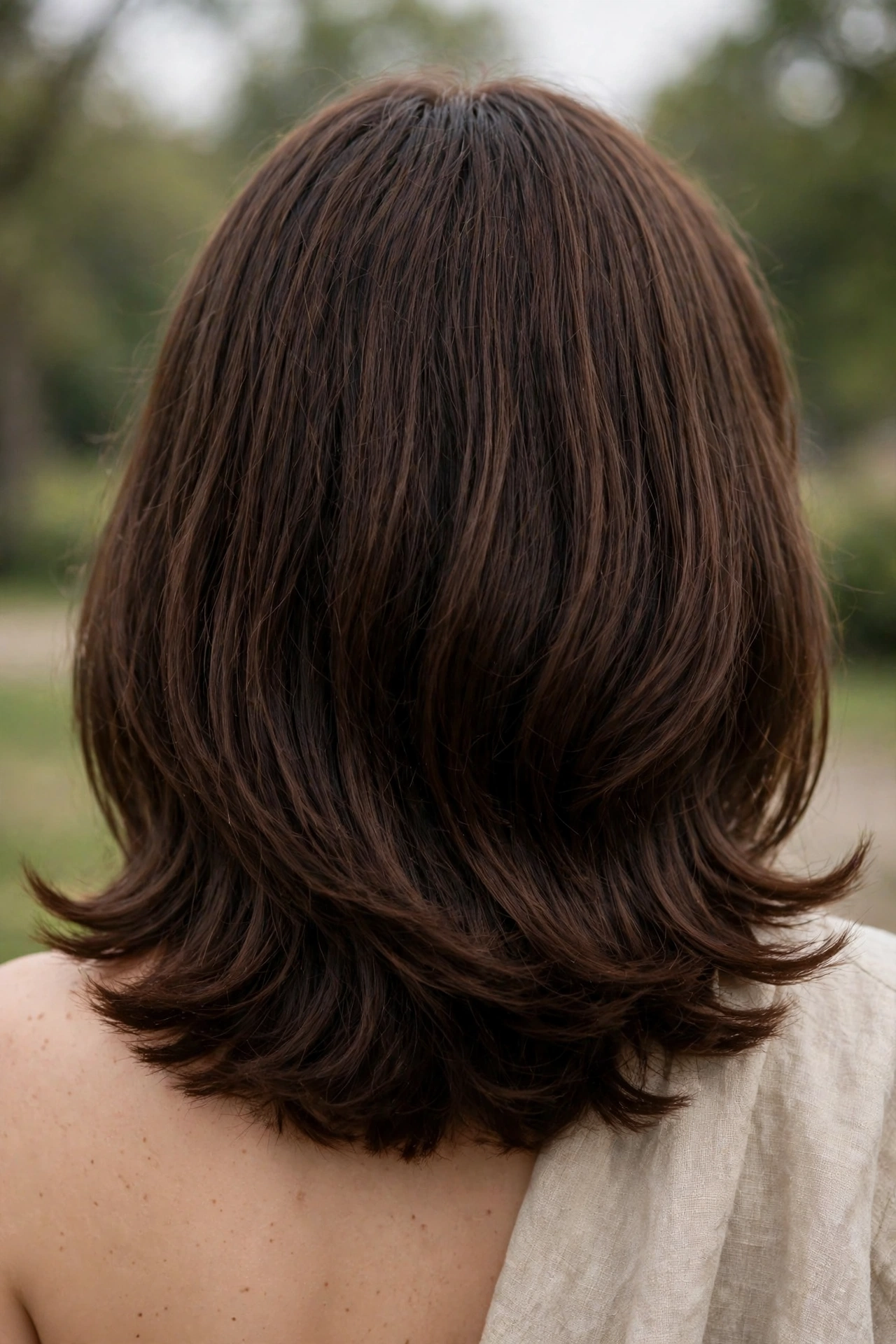
Styling Tip: Wear it down to show the U-shape from the back. The point-cut ends keep the edge light.
8. V-Cut Back That Pulls Weight Away From the Sides
The V-cut is the U-cut’s sharper cousin. The hair is shaped into a V at the back, with the sides shorter than the middle. On thick hair, that angle pulls weight away from the sides of the head. It is one of the most effective ways to do it. That is exactly where dense hair tends to feel heaviest and widest. The center keeps its length, so the cut still reads as medium-length and full.
Pair the V-shape with a little interior layering. Then the back of your hair stops stacking up into a heavy block. It is a great option if you wear your hair down most of the time. It falls in a clean, tapered line instead of flaring outward.
Ask your stylist for: a soft V-shape at the back with interior layers through the sides. That takes the weight out where it sits heaviest.
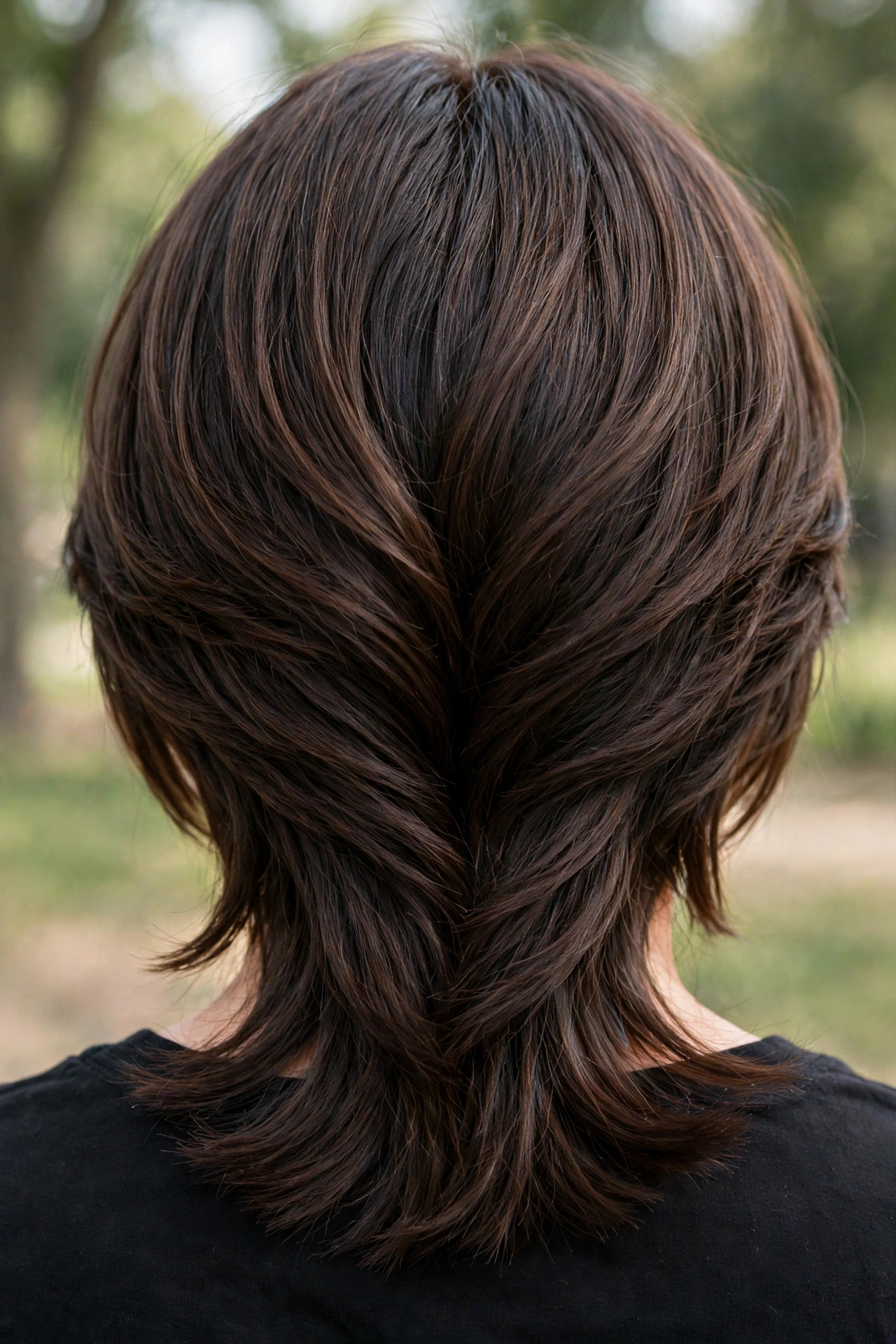
Styling Tip: Wear it down and let the V-shape taper the back. The sides stay slim without extra work.
9. Thick Curtain Bangs Blended Into Layers
Bangs on thick hair can go wrong fast. A solid, heavy fringe becomes a curtain of its own. Curtain bangs are the safer choice. They part in the middle and dissolve into the face-framing layers. So all that density becomes softness instead of bulk. Cut slightly heavier than a standard curtain bang, then texturized and blended, they hold their shape. They never look thick or blocky.
The trick is the blending. The bangs should flow into the layers around your cheekbones and jaw. That breaks up the solid curtain of hair around your face, while the back stays full. They also grow out gracefully, since there is no hard line to maintain.
Ask your stylist for: curtain bangs cut slightly heavier than usual. Ask for texturized ends blended into long face-framing layers.
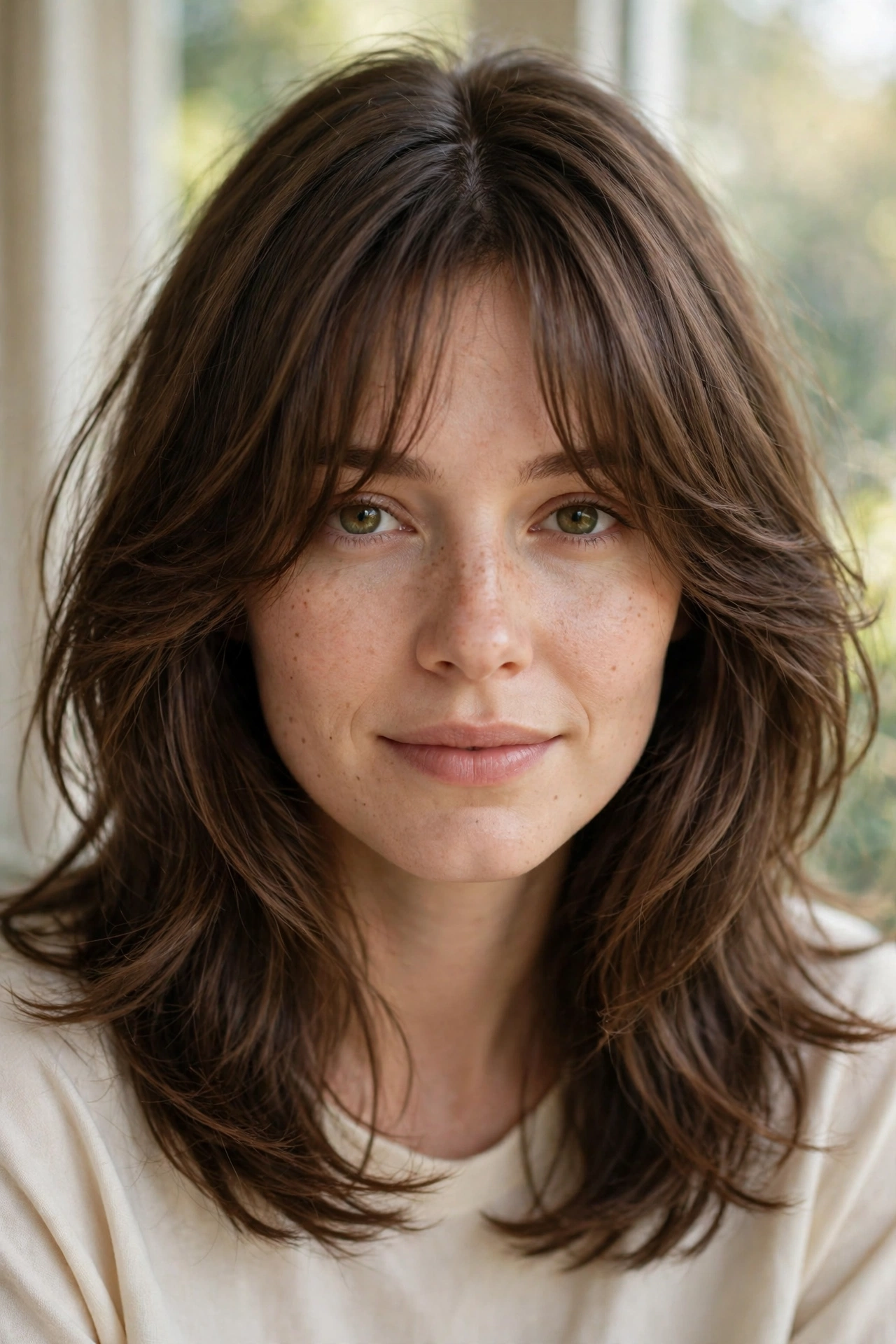
Styling Tip: Blow-dry the bangs away from the middle part. They blend into the layers around your face.
10. Controlled-Volume Cut for Thick Wavy Hair
Thick, wavy hair wants to be big. But big and wild are two different things. This cut keeps the lush body you love while controlling the width. Layers are shaped through the sides and ends, which is exactly where wavy hair expands. So the waves stay defined, and the silhouette stays intentional instead of drifting outward.
The goal is to thin the bulk without thinning the wave pattern. Weight removed at the sides and ends lets each wave fall in its own shape. The hair dries with far less frizz and fuss. A little styling cream scrunched into damp hair is usually all it needs.
Ask your stylist for: layers shaped through the sides and ends to control width. Keep the body through the lengths.
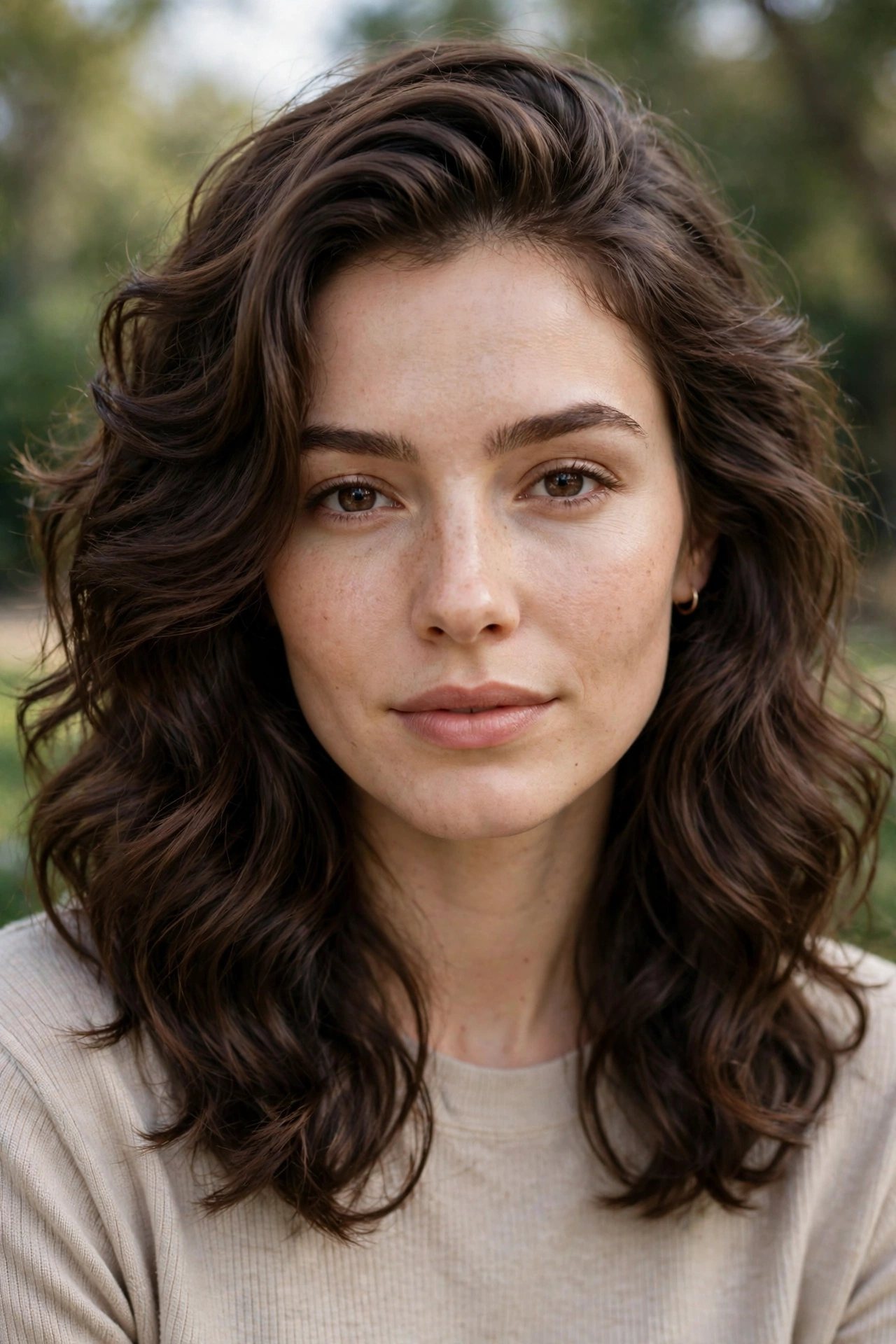
Styling Tip: Scrunch a little styling cream into damp hair. The waves dry defined without extra width.
11. Layered Cut for Thick Curly Hair
Thick, curly hair at medium length needs shape support, not just length removal. Without layers, dense curls stack on top of each other and the cut goes wide. Layers cut a little shorter through the back let the curls spring up in a rounded, balanced shape. The weight is distributed instead of piling at the bottom.
This cut works with your curl pattern rather than fighting it. The layers give each curl room to form, so the hair looks lighter and more defined. The medium length keeps enough weight to stop the curls from puffing straight outward. Let it air-dry or diffuse gently, and the shape is already there.
Ask your stylist for: layers cut slightly shorter through the back. Shape them dry or with your natural curl pattern in mind, so the silhouette stays rounded.

Styling Tip: Let it air-dry or diffuse gently. The layers give each curl room to form.
12. Graduated Rounded Perimeter Cut
The graduated rounded perimeter is the quiet fix for the dreaded triangle. Instead of one heavy horizontal line at the bottom, the length steps gradually around the perimeter. It curves gently inward. That rounded shape guides thick hair down instead of letting it flare out. So the cut stays narrow at the sides and full at the ends.
This is a beautiful choice if you want a polished, grown-up shape that still feels soft. The graduation removes weight from the outline itself, while the interior stays full. So your hair looks thick in the best way, not heavy in the worst way.
Ask your stylist for: a graduated, rounded perimeter with long interior layers. That way the shape curves in rather than flaring out.
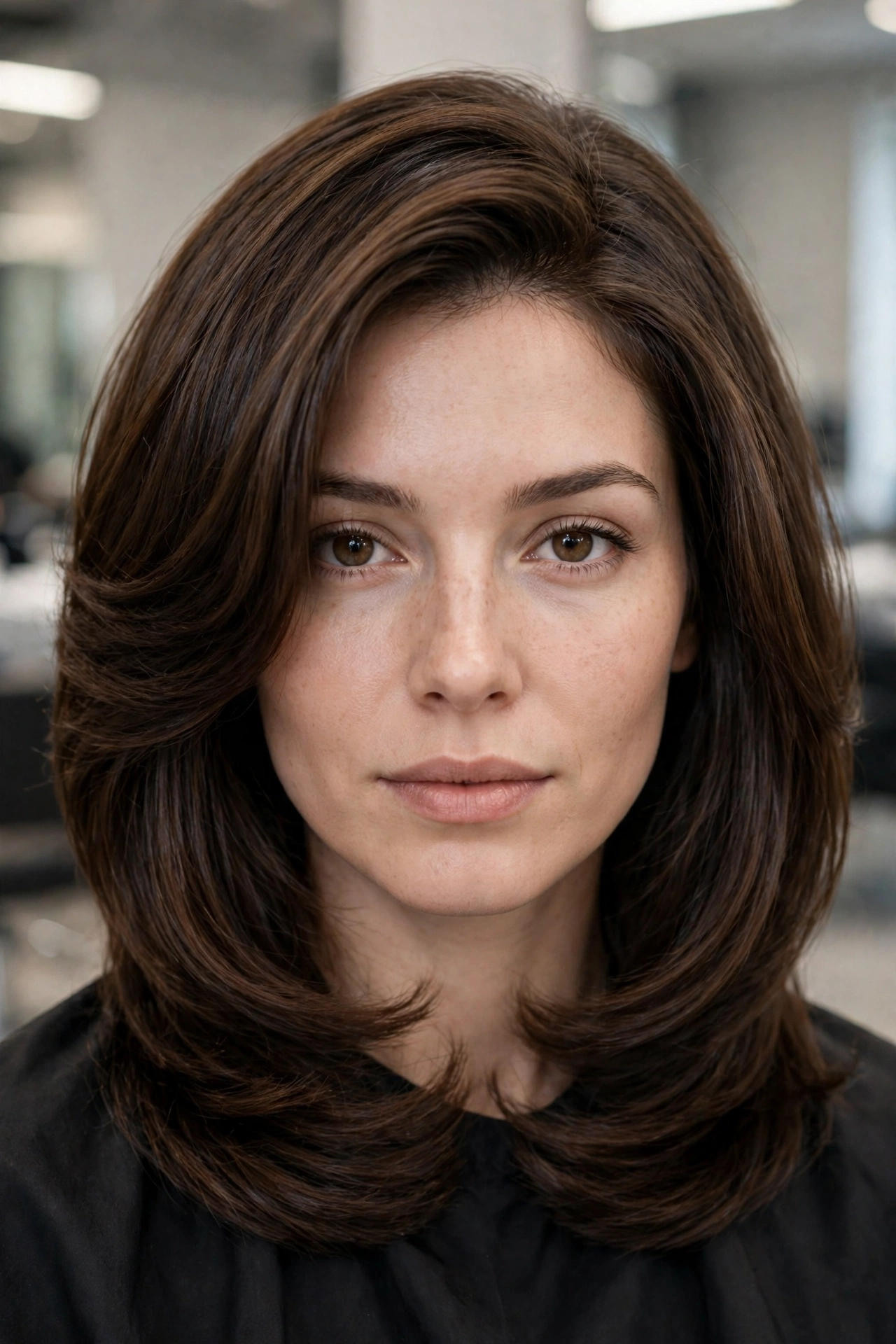
Styling Tip: Blow-dry the ends under to show the rounded shape. The perimeter curves in on its own.
Tips for Styling and Caring for Thick Medium-Length Hair
A great cut does half the work. The rest is how you look after it between appointments. These simple habits keep thick, medium-length hair light, smooth, and easy to live with.
- Dry in sections. Thick hair dries slowly. So work in two or three sections instead of blasting the whole head at once. It dries faster and sits smoother.
- Use lightweight products. Heavy creams can weigh down the mid-lengths. A light leave-in on damp hair, then a little styling cream or mousse, is usually enough.
- Ask for interior work, not surface thinning. Layers and thinning placed inside the shape slim thick hair down. The same work carved into the surface can puff it up and add frizz.
- Keep the perimeter strong. Resist the urge to thin the ends too much. Wispy, see-through tips make thick hair look thinner in the wrong way. Texture the interior, protect the outline.
- Book trims every 8 to 12 weeks. Layered shapes on thick hair grow heavy again as the bulk builds back up. So regular trims keep the weight removal working.
- Sleep on it loosely. A loose, low braid or a soft twist at night keeps thick hair from tangling. It helps the shape hold until morning.
Pick the Cut That Matches Your Hair Type and Your Routine
All 12 cuts remove bulk from the inside while keeping fullness, but they suit different hair types. Straight hair suits the blunt lob with hidden thinning. Wavy hair suits the controlled-volume cut. Curly hair suits the layered cut with shorter layers through the back.
Think about your routine too. The ghost layers, long layers, and U-cut need little styling. The shag and the butterfly cut need a quick scrunch or blow-dry. Pick the cut you will actually enjoy styling on a busy morning.
Bring a photo to your appointment and use the words in each style. Ask for interior work, not surface thinning. That is how thick, medium-length hair stays light, smooth, and full.
Frequently Asked Questions
What is the best medium-length haircut for very thick hair?
A layered lob or collarbone cut with interior, invisible layers is the safest all-rounder. It removes weight without visible steps, keeps enough length to feel feminine, and is easy to style. If you prefer a polished look, the blunt lob with hidden underlayer thinning is a close second.
Do layers make thick hair look thinner or bigger?
It depends on where the layers sit. Long, interior layers remove weight and make thick hair sit smaller and smoother. Short, bulky layers stacked on top can add width and make hair look bigger. The rule is simple. Layers that stay inside the shape slim it down, while layers chopped into the surface puff it up.
How do I ask my stylist to thin out my thick hair?
Say this to your stylist. “Thin the interior and mid-lengths, but keep my perimeter and ends strong.” Ask for point-cutting or interior layering. Mention where the hair feels heaviest, usually the sides or the underneath. Bringing a photo of the cut you like helps even more.
Can thick hair be one length at medium length?
It can, but only if the inside is thinned first. A truly one-length cut with no interior work can go bulky and boxy on very thick hair. It shows most as it grows out. A blunt outline with hidden thinning underneath gives you the clean one-length look without the triangle.
How often should thick medium-length hair be trimmed?
Every 8 to 12 weeks is a good rhythm for most layered cuts on thick hair. That keeps the shape defined and stops bulk from building back up. If your cut is mostly blunt with hidden thinning, you can often stretch a little longer between visits.
Conclusion
Thick hair is never the problem. The wrong cut is. At medium length, the right shape removes weight from exactly the places where dense hair feels heaviest. It keeps the fullness that makes thick hair so beautiful in the first place. Choose invisible layers, a hidden-thinned blunt lob, a shag, or a butterfly cut. The principle is the same: thin the inside, protect the outline, and let the shape do the work.
Take your favorite idea from this list to your next appointment. Use the words your stylist will understand. Then enjoy medium-length hair that finally feels as light as it looks.