
14 Friendsgiving Party Ideas for a Fun, Low-Pressure Night With Friends (2026)
14 Friendsgiving Party Ideas for a Fun, Low-Pressure Night With Friends (2026)
Friendsgiving is Thanksgiving without the formal rules. It is a meal shared with the people you chose, usually as a potluck, on a day that suits your group in November. No seating chart, no family tradition to follow, and no pressure to cook a perfect feast on your own.
That freedom is exactly what makes Friendsgiving so fun. You can host it in pajamas, turn it into a brunch, or gather around a backyard fire instead of a dining table. The ideas below are all built for friends: casual, low-pressure, and easy to share. That way, the host is not stuck in the kitchen all night.
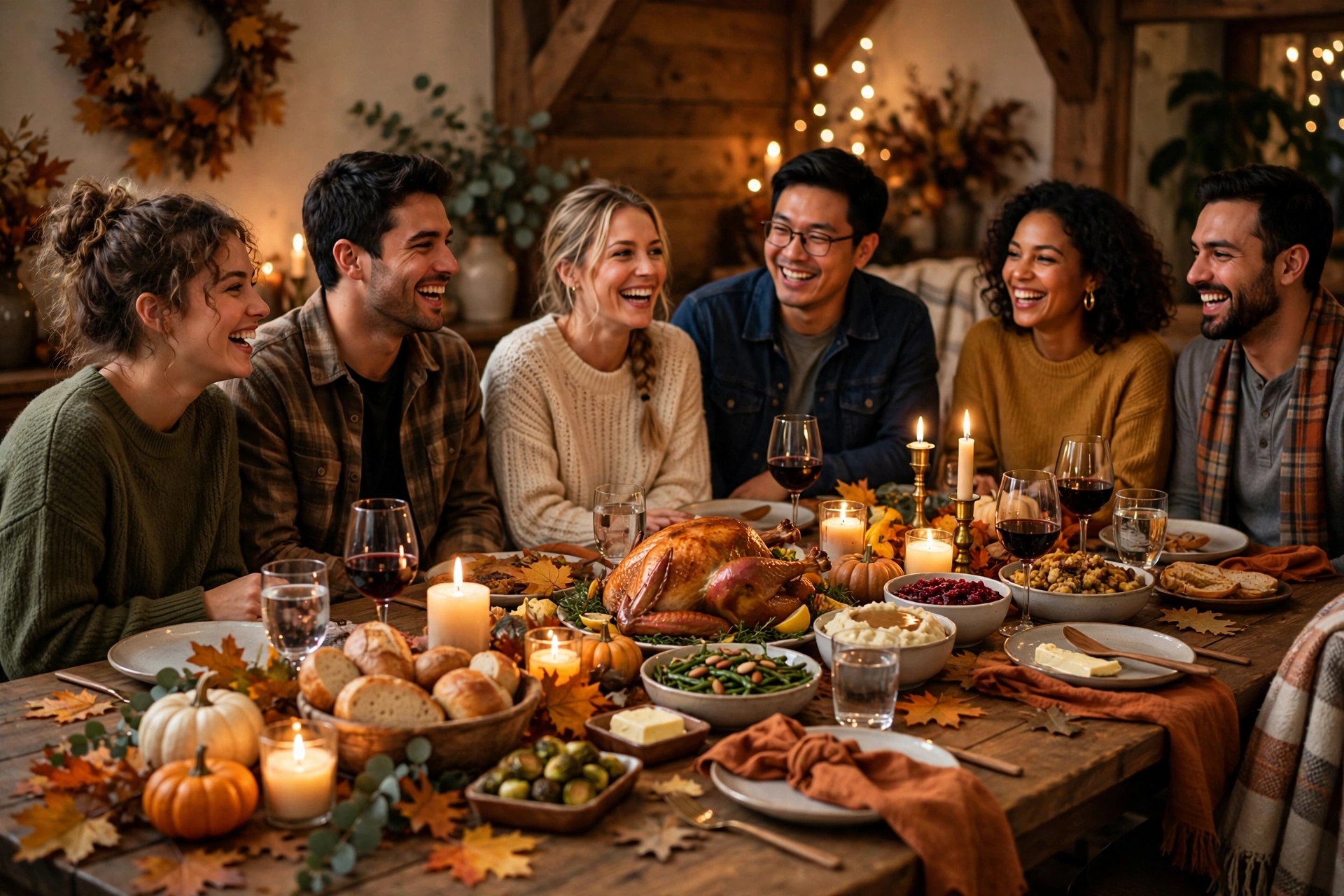
Table of Contents
- What Is Friendsgiving?
- 1. Run It as a True Friends Potluck With a Sign-Up Sheet
- 2. Host a Cozy Pajama Friendsgiving
- 3. Try a Friendsgiving Brunch Instead of Dinner
- 4. Cook Around the World Together
- 5. Hold a Pie Night With a Blind Taste-Test Ranking
- 6. Turn Dinner Into a Friendly Cook-Off
- 7. Cover the Table in Kraft Paper for Doodles and Notes
- 8. Start With Two Truths and a Thankful
- 9. Play Friendsgiving Bingo and Group Trivia
- 10. Hand Out Silly Friendsgiving Superlatives
- 11. Set Up a Build-Your-Own Dessert Bar
- 12. Move the Party to a Backyard Bonfire
- 13. Swap Recipes and Build One Shared Photo Album
- 14. Send Everyone Home With Leftovers and a Next-Year Note
- Tips for Hosting Friendsgiving
- Frequently Asked Questions
- Conclusion
What Is Friendsgiving?
Friendsgiving is a Thanksgiving-style meal shared with friends instead of, or as well as, family. Most groups hold it as a potluck on the weekend before Thanksgiving. Another November day works too, if it suits everyone better. There is no fixed date and no official menu, which is the whole point.
The host usually provides the space and the main dish. Each friend brings a side, a dessert, or drinks. Because everyone pitches in, the night stays relaxed and affordable. The focus stays where it belongs: on the people around the table.
1. Run It as a True Friends Potluck With a Sign-Up Sheet
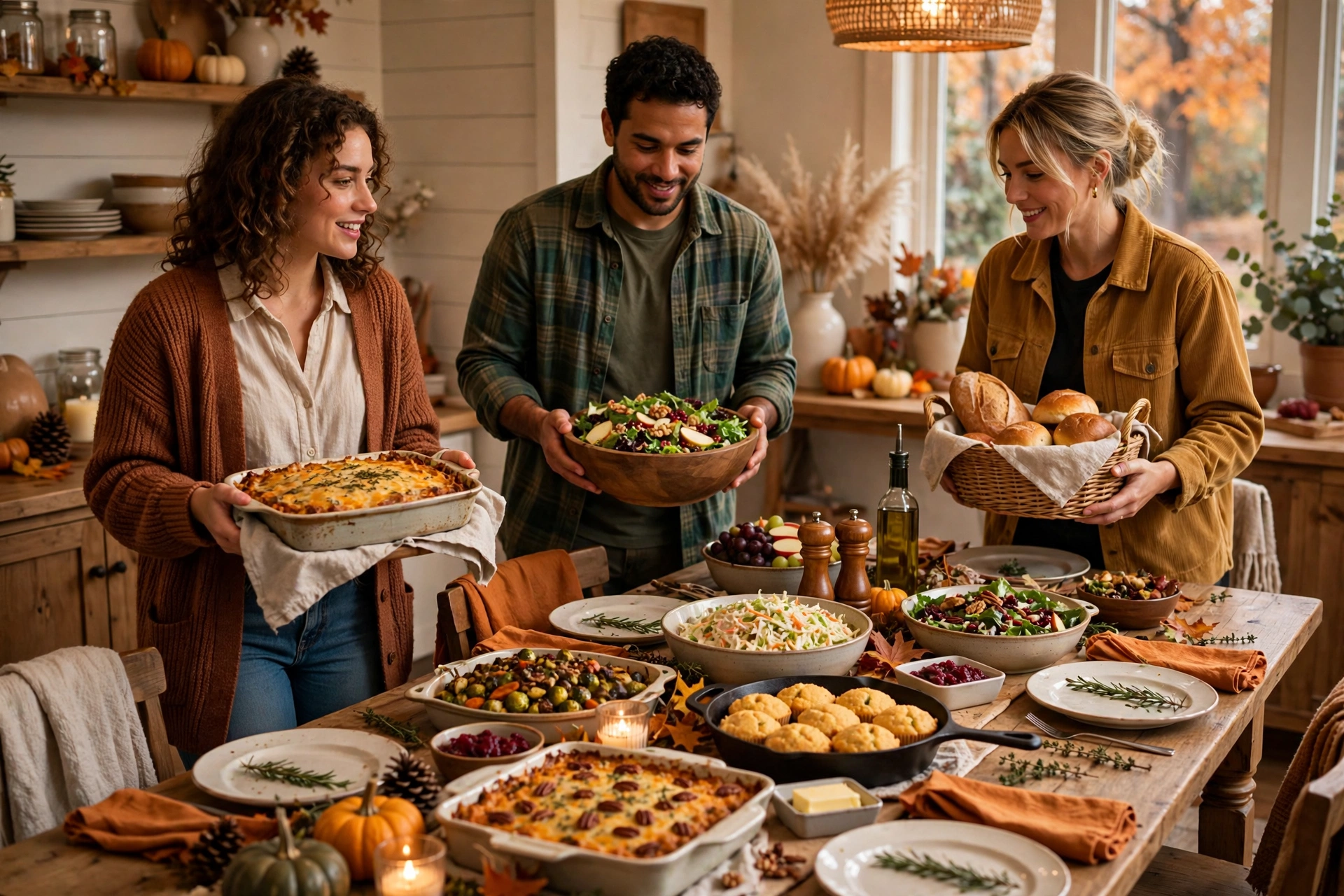
The easiest way to host Friendsgiving is to let everyone bring one dish. Set up a simple sign-up sheet with slots by course. You need one main, two or three sides, a salad, bread, a dessert, drinks, and ice. Friends claim a slot, so you never end up with five desserts and no vegetables.
Ask guests to bring their dish ready to serve, in the dish they will serve it in, with their own serving spoon. That one request saves the host a pile of washing up. It also keeps the food on the table instead of waiting for oven space. A group chat works fine for the list. A shared online document makes it easy for everyone to see what is still open.
Party Tip: Send the sign-up sheet out early, and leave one slot open for drinks and ice so nothing gets missed.
2. Host a Cozy Pajama Friendsgiving
Tell everyone to come in their softest pajamas, and the whole night relaxes at once. A pajama Friendsgiving is perfect for a close group. It suits friends who would rather curl up on the couch than sit at a formal table. Think flannel, fuzzy socks, blankets, and mugs of something warm.
Serve food that fits the mood: a big pot of soup or stew, baked mac and cheese, warm bread, and pie straight from the dish. Set the table low, or skip it altogether and eat in the living room. When nobody has to dress up, people stay longer and talk more. That is the real point of the night.

Party Tip: Keep the menu to one-pot dishes, since soup, stew, and mac and cheese all suit a couch supper.
3. Try a Friendsgiving Brunch Instead of Dinner
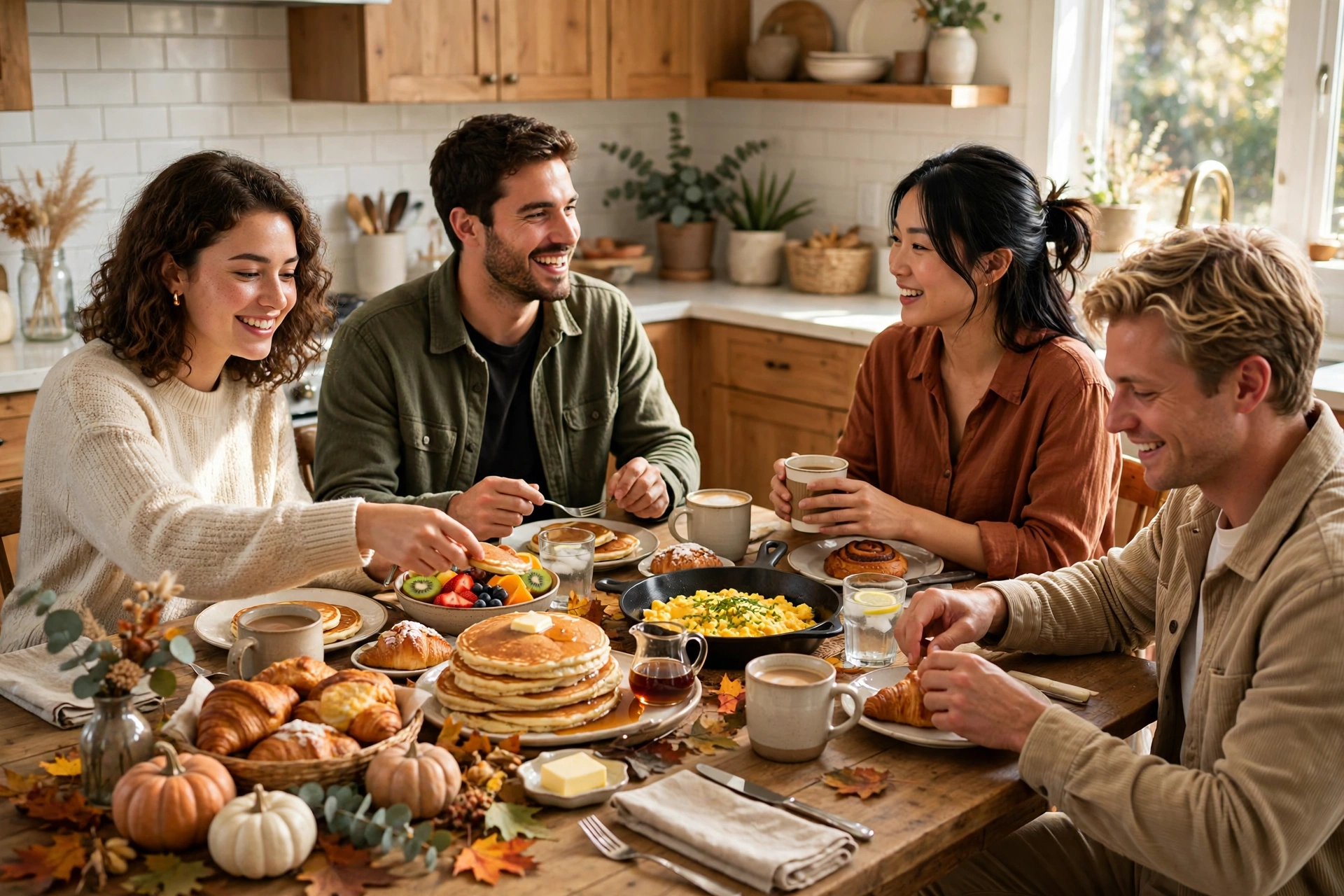
Not everyone can manage a big evening meal, and a Friendsgiving brunch is a lovely change. Meet late in the morning, when the light is good. Nobody has spent the day cooking yet. Pancakes, eggs, roasted potatoes, fruit, and pastries make a feast without a turkey in sight.
Add a few fall touches to keep it seasonal: pumpkin bread, spiced cider, and a small pumpkin or two on the table. Brunch also suits friends with evening plans or little ones at home. It leaves the rest of the day free. If your group is always busy at night, brunch might become your new tradition.
Party Tip: Set the table the night before, so a late-morning start still feels relaxed.
4. Cook Around the World Together
An around-the-world potluck lets every friend bring a dish that means something to them. One person brings a family recipe. Another brings a dish from a place they have traveled. Someone else tries a cuisine they have always wanted to cook. The table ends up far more interesting than a standard menu.
Ask each person to write a small card with their dish and a sentence about why they chose it. It gives guests something to talk about as they serve themselves. It also makes the meal feel personal. This idea works especially well for diverse friend groups. It is a natural way to include vegetarian and gluten-free dishes too.

Party Tip: Ask each guest to label their dish, so everyone can spot the vegetarian and gluten-free options fast.
5. Hold a Pie Night With a Blind Taste-Test Ranking
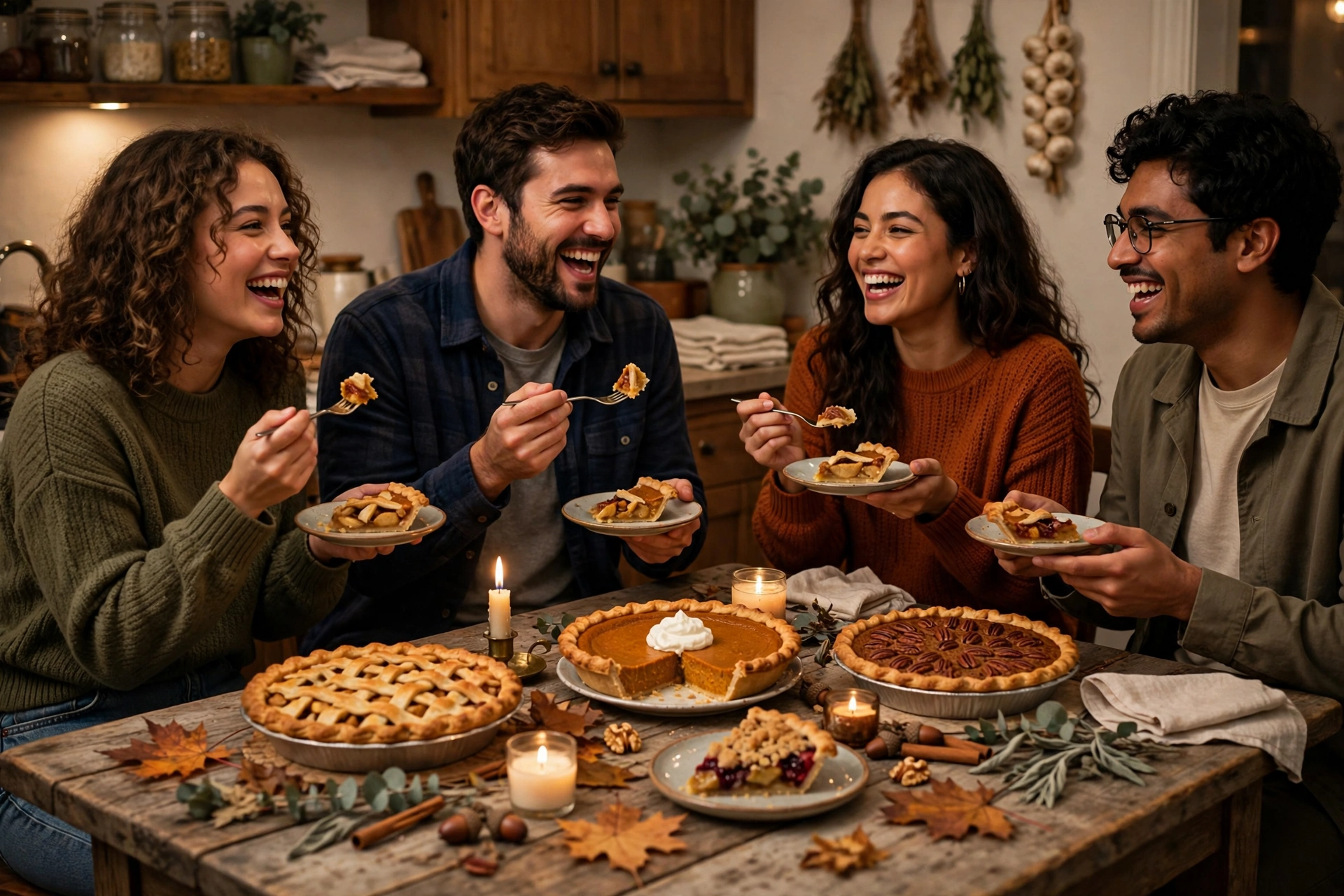
If your group loves dessert, make it the main event. For a pie night, ask a few friends to each bring a pie. Then cut every pie into small tasting slices. Number the plates, hand out simple scorecards, and let everyone taste and vote for a winner.
The blind ranking keeps it fair and funny, because nobody knows whose pie they are praising. Keep the meal before it light, like soup and bread or a grazing board. That way, there is room for pie. A small handmade ribbon or a silly title for the winner is all the prize you need.
Party Tip: Cut tasting slices small, since guests need room to try every pie before they vote.
6. Turn Dinner Into a Friendly Cook-Off
Competitive friends will love a cook-off. Pick one dish, like chili or a casserole, and let everyone bring their best version. Set a simple rule: it must be homemade, and it must arrive ready to serve. Then let the group taste and vote.
Keep the judging lighthearted. Categories like best flavor, most creative, and best presentation let more than one person win. A cook-off also solves the menu problem on its own, because the contest dish becomes the meal. Add a salad, some bread, and a dessert, and dinner is done.
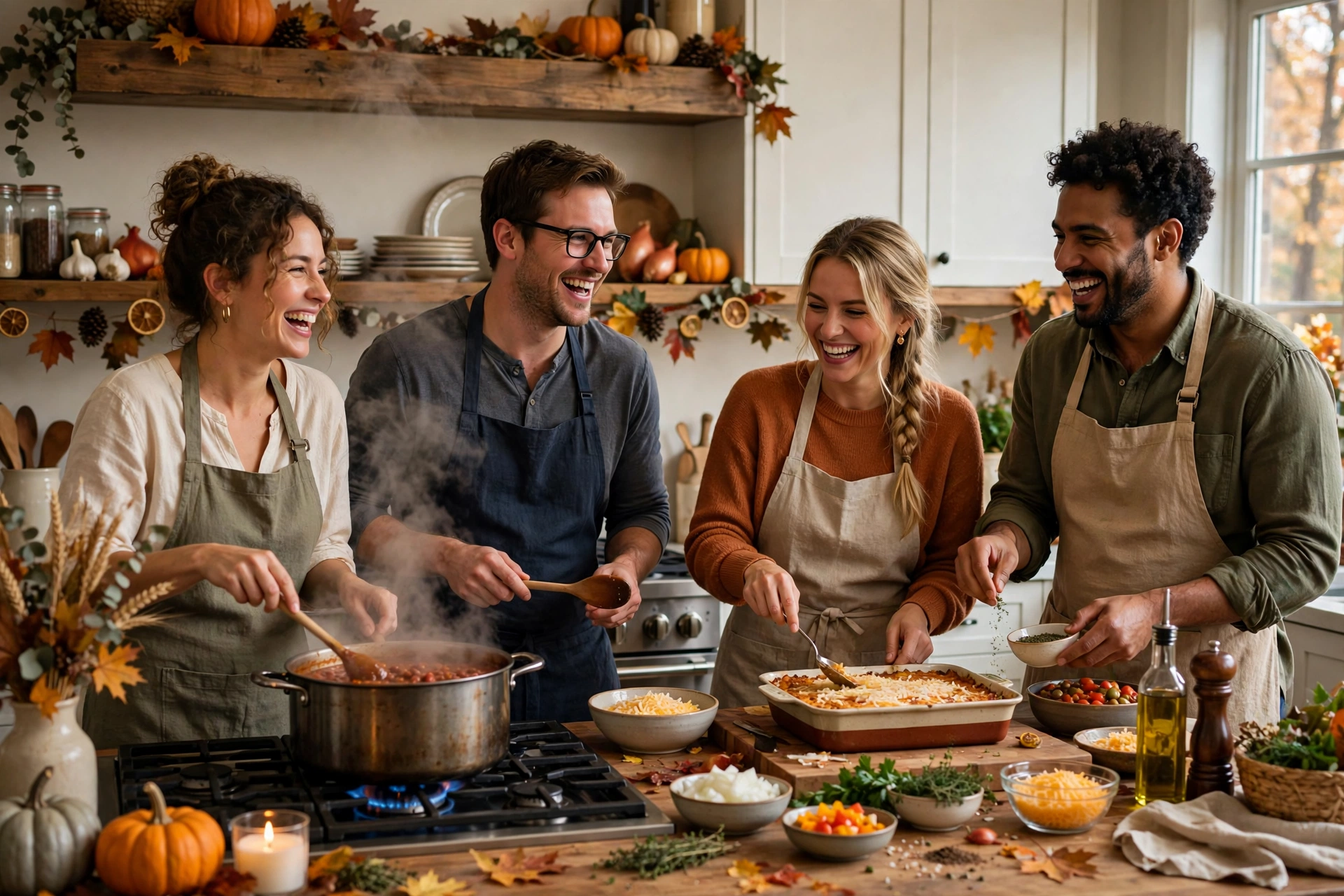
Party Tip: Pick one dish and one vote, since a simple contest keeps the judging fun and fast.
7. Cover the Table in Kraft Paper for Doodles and Notes
Roll a sheet of brown kraft paper down the table, set out markers, and let the table become the decoration. Friends doodle, write jokes, and leave thank-you notes for each other as the night goes on. By dessert, the tablecloth tells the story of the evening.
This idea costs almost nothing, and it protects your table. It also gives shy guests something easy to do with their hands. Take a photo of the paper before you clear it away, and share it with the group the next day. It is the kind of simple touch people remember far longer than fancy place cards.

Party Tip: Put out plenty of markers, and take a photo of the paper before you clear the table.
8. Start With Two Truths and a Thankful
The first half hour sets the tone for the night. A gentle icebreaker helps, especially when not everyone knows each other. In Two Truths and a Thankful, each guest shares two true things they are thankful for this year and one made-up one. The group guesses which one is fake.
It gets people laughing within minutes, and it is warmer than a formal round of speeches. Play it while guests arrive and settle in with a drink. Latecomers can join the next round without missing anything. One short game is enough; after that, let the conversation take over.

Party Tip: Play one short round as guests arrive, then let the conversation take over.
9. Play Friendsgiving Bingo and Group Trivia
After dinner is the best time for a game that gets the whole table involved. Make simple Friendsgiving bingo cards with squares like “someone takes a photo of their plate” or “someone goes back for seconds.” Hand them out with dessert. It is easy, optional, and needs almost no setup.
Or try group trivia: ten quick questions about the people at the table and the season. Who has lived in the most cities? Who makes the best mashed potatoes? Questions about your own friend group are always funnier than generic ones. They also make new friends feel included fast.
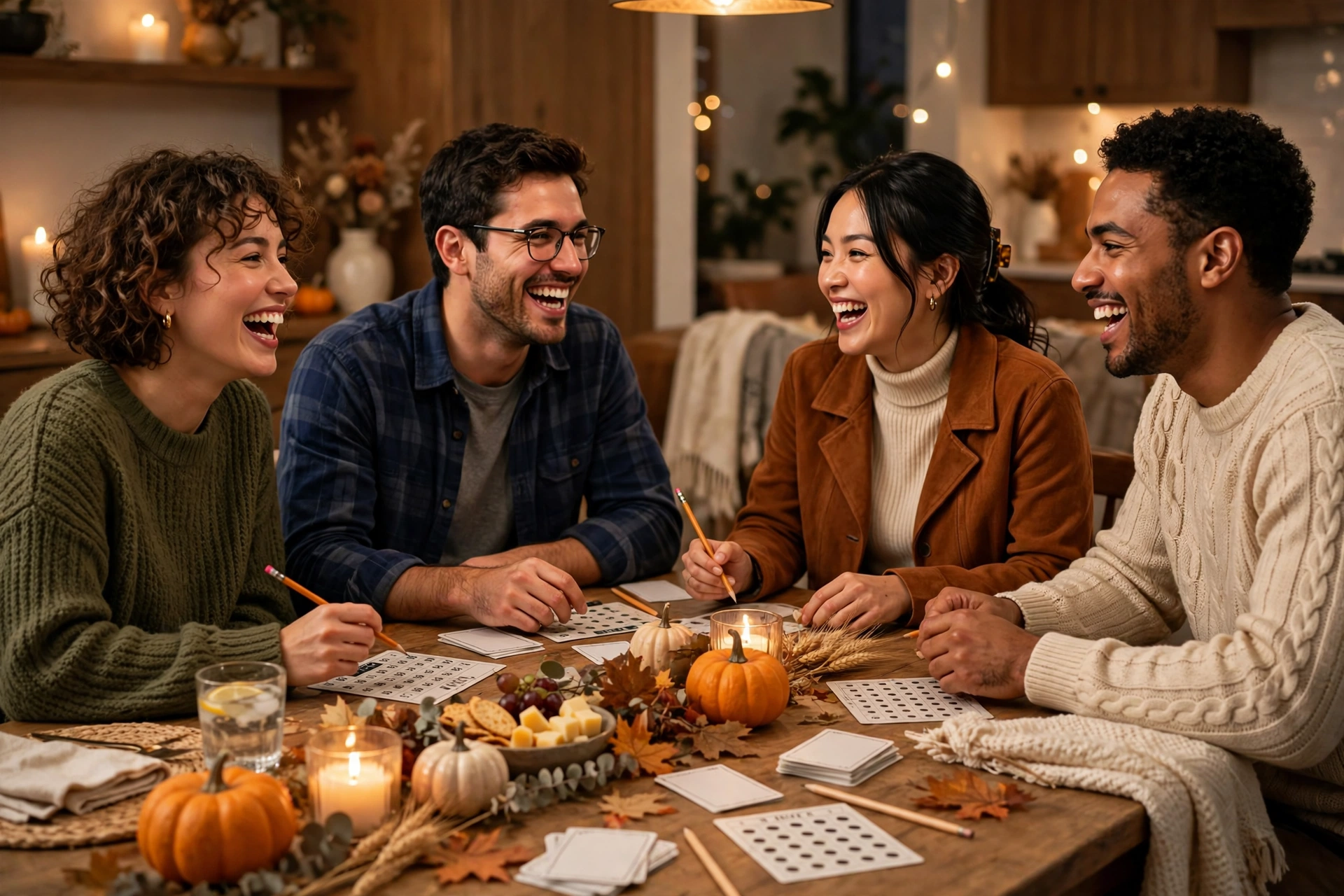
Party Tip: Hand the bingo cards out with dessert, so the game starts when everyone is still at the table.
10. Hand Out Silly Friendsgiving Superlatives
End the night with Friendsgiving superlatives, the kind of awards only your friend group could invent. Best dish, most likely to take leftovers, best dressed, funniest toast, or most likely to be late next year. Announce them with a little ceremony after dessert.
You can print simple certificates or just read the awards out loud. Keep them kind and funny, never mean, so everyone enjoys the joke. Superlatives give the night a happy ending. They also give your group a running joke to repeat at next year’s Friendsgiving.
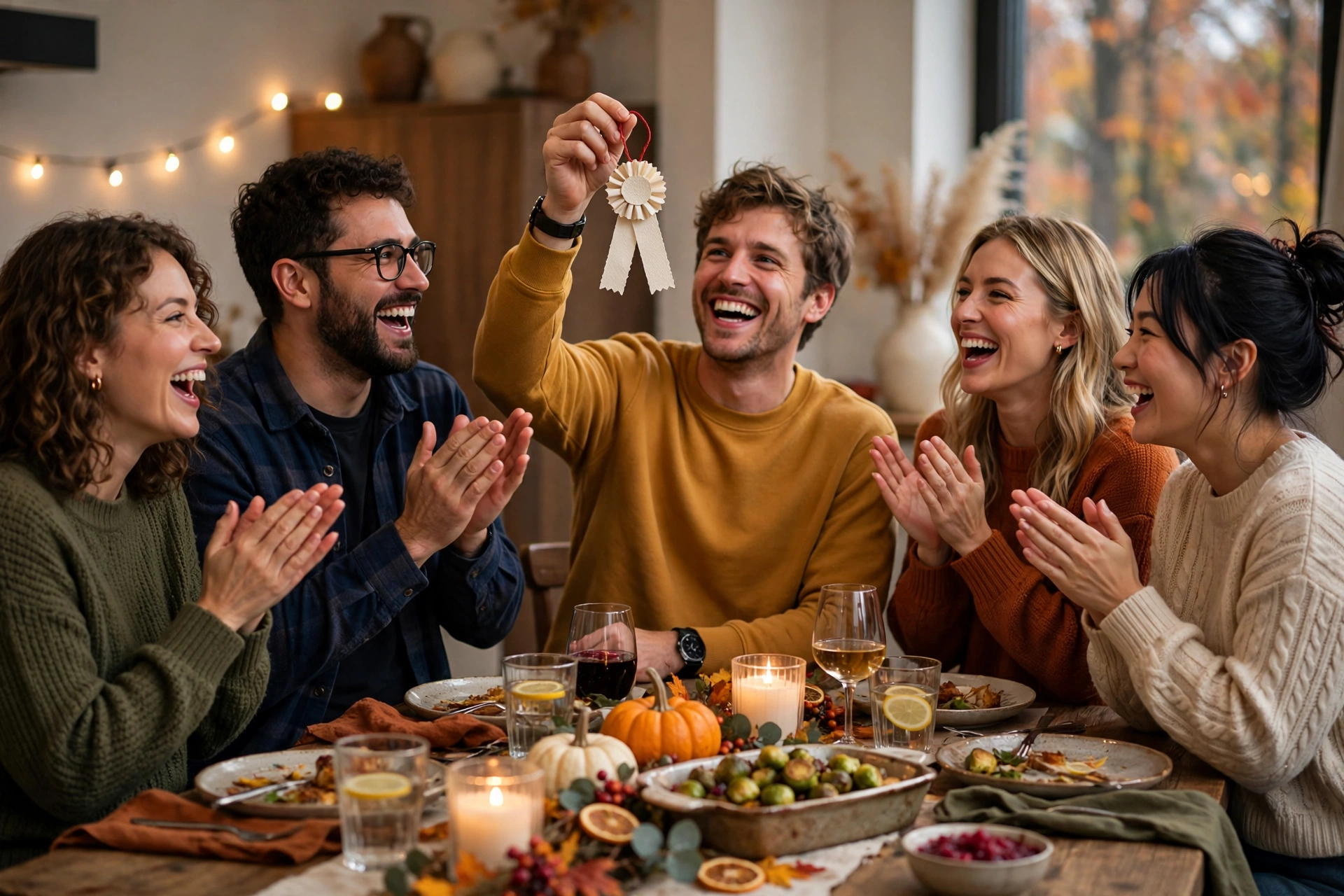
Party Tip: Keep every award kind and funny, and announce them after dessert for a happy ending.
11. Set Up a Build-Your-Own Dessert Bar
A build-your-own dessert bar turns dessert into an activity. Set out a plain base, like vanilla ice cream, warm brownies, or sliced pie. Then line up toppings in small bowls: whipped cream, chocolate sauce, crushed cookies, chopped nuts, and fall fruit. Guests build exactly what they want.
It is easy for the host, because most of the toppings need no cooking. It suits picky eaters and sweet tooths alike. Label anything with common allergens so everyone can choose safely. A dessert bar also keeps people at the table talking long after the main course is gone.
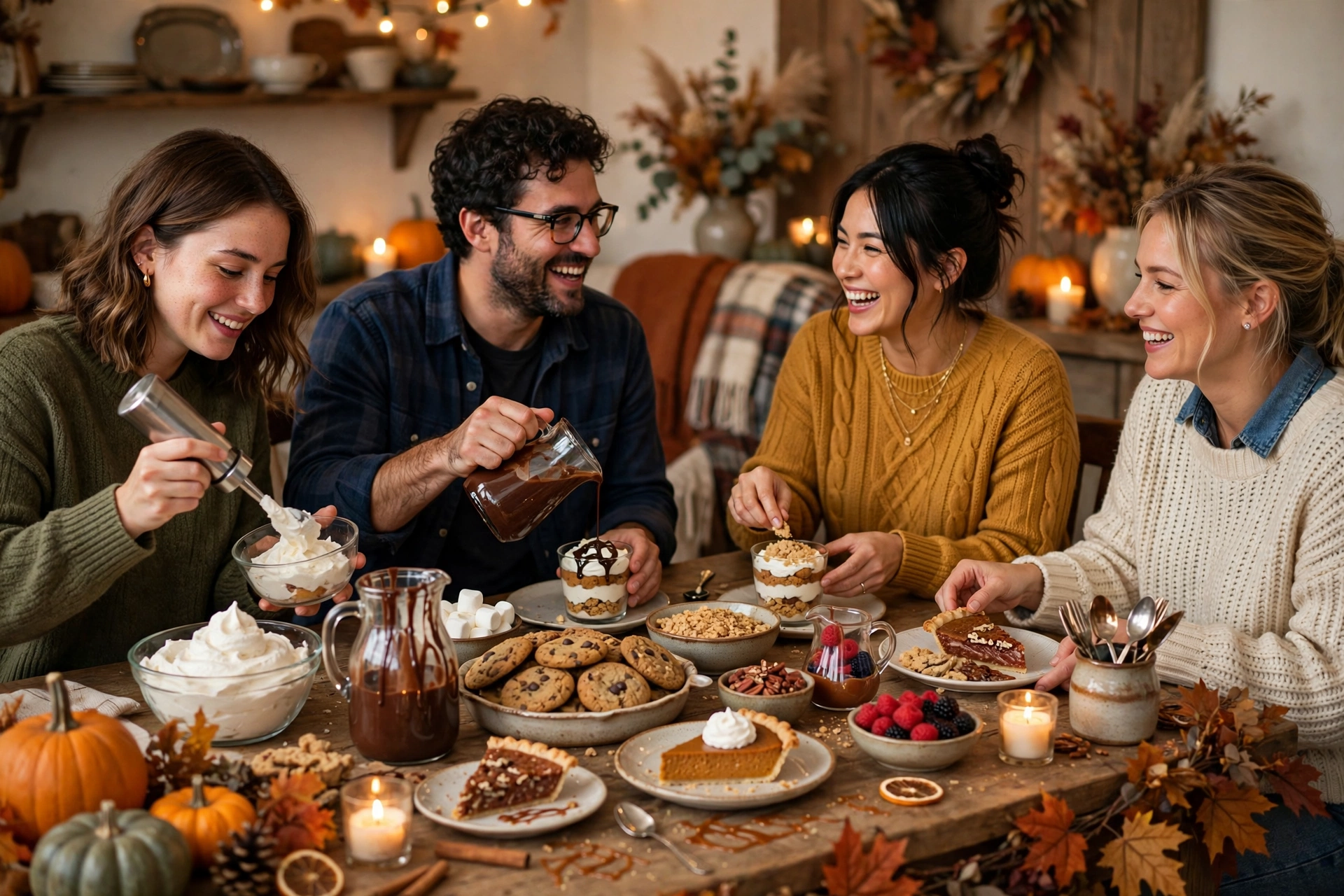
Party Tip: Label anything with common allergens, so every guest can build a dessert safely.
12. Move the Party to a Backyard Bonfire
If the weather allows, take Friendsgiving outside. A backyard bonfire with blankets, mugs of cider, and a simple meal feels completely different from a dining room. It suits groups that like to linger. Serve food that is easy to eat outdoors, like sliders, roasted vegetables, and pie in hand.
Keep the fire at a safe distance from the house and anything that can burn. Have enough seating so nobody is left standing. String lights and a few pumpkins make the space feel festive without much effort. As the night cools down, the fire becomes the natural place for stories and quiet conversation.
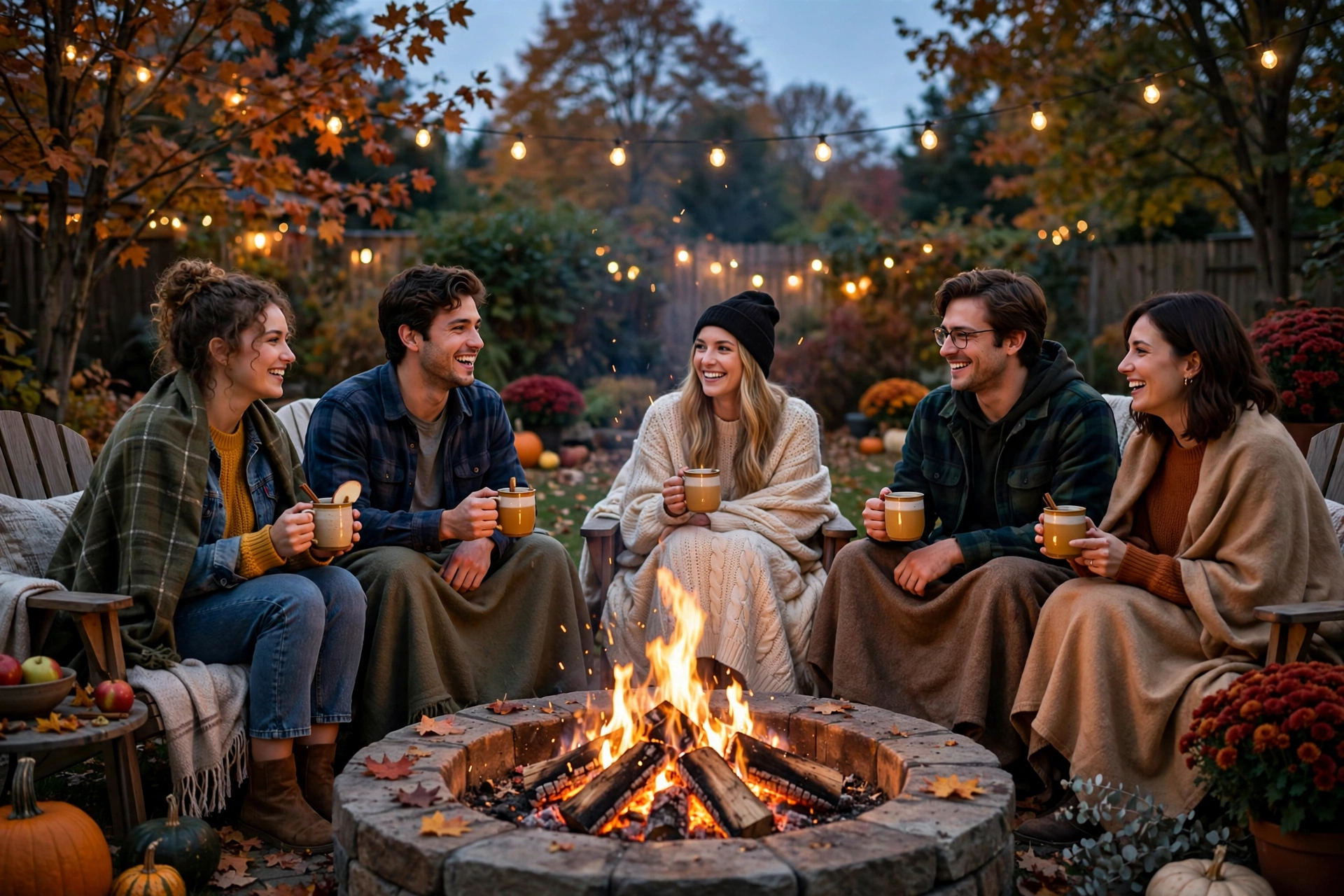
Party Tip: Set out enough chairs and blankets first, so nobody is left standing in the cold.
13. Swap Recipes and Build One Shared Photo Album
Everyone leaves a potluck wanting the recipe for at least one dish. Make it part of the night with a recipe swap. Each guest brings a printed copy of the recipe for the dish they made. Guests take home the ones they liked. It is a small gesture that makes the meal last beyond one evening.
Pair it with one shared photo album for the night. Ask everyone to add their photos to the same album before they leave. Then the host is not the only one with pictures. It is far easier than chasing photos in a group chat later. Next year, you will all enjoy looking back at them.

Party Tip: Ask guests to add their photos to the shared album before they leave, so no photo gets lost in a group chat.
14. Send Everyone Home With Leftovers and a Next-Year Note
The best Friendsgiving ending is a generous one. Set out take-home containers and let friends pack up leftovers before they go. The host’s fridge stays manageable, and everyone gets a second meal out of the night. It is a small kindness that guests always remember.
Add one more touch: ask each friend to write a prediction or a wish for next year on a card before they leave. Keep the cards in an envelope and read them out at next year’s Friendsgiving. It turns one dinner into a tradition. It also gives everyone a reason to come back.

Party Tip: Keep an envelope ready for the next-year cards, and read them out at next year’s Friendsgiving.
Tips for Hosting Friendsgiving
Keep the guest list small enough for one conversation, usually six to fourteen people. Send the invitation three to four weeks ahead, because November fills up fast. Set a reply date about a week before the dinner, so the food matches the headcount.
Plan the meal around what your kitchen can handle. A smaller main dish, like a turkey breast or a roasted chicken, cooks faster and leaves room in the oven. Make a self-serve drinks station so you are not pouring drinks all night. Do not forget the basics: ice, extra chairs, and trash bags.
Most of all, keep the schedule loose. Plan one game before dinner and one after, and let the rest of the night happen on its own. Friendsgiving works best when the host enjoys it too. Share the work, keep it simple, and say yes to help when friends offer it.
Share the Work and the Night Stays Relaxed
Friendsgiving works because the work is shared. The host provides the space and the main dish, and every friend brings one dish. No one person cooks the whole feast, and no one person cleans it all up either.
If you remember one rule, make it this one: send the sign-up sheet early, keep the guest list small enough for one conversation, and let the night stay loose. A relaxed host makes a relaxed party, and a relaxed party is the one friends want to come back to.
Frequently Asked Questions
What is Friendsgiving?
Friendsgiving is a Thanksgiving-style meal shared with friends instead of, or as well as, family. It is usually a potluck held in November, with no fixed date and no strict rules.
When is Friendsgiving usually held?
Most groups hold Friendsgiving on the weekend before Thanksgiving. The Friday or Saturday after it works too, so it does not clash with family plans. Any day in November that suits your group works.
What should I bring to a Friendsgiving if I cannot cook?
Bring something the host would otherwise have to buy: drinks, ice, a store-bought dessert, bread, or a ready-made appetizer. Take-home containers are always welcome too.
How many people should I invite to Friendsgiving?
Six to fourteen people is a good size for most homes. It is enough for a lively table and a full potluck. It is still small enough that everyone fits in one room and can join one conversation.
Do I need a theme for Friendsgiving?
No, a theme is optional. A simple theme like pajamas, brunch, or a pie night can make planning easier. A plain potluck with good food and good company is already a complete Friendsgiving.
Conclusion
Friendsgiving is not about a perfect table or a perfect menu. It is about gathering the people you chose, sharing the cooking, and making room for laughter, games, and second helpings. Pick one or two ideas from this list, send the invitations early, and let your friends do the rest.
A pajama night, a brunch, a bonfire, or a classic potluck all work the same way. The best Friendsgiving is the one where everyone feels welcome and nobody is stressed. Start planning now, and enjoy a night that is all yours.