
Winter Skincare Tips for Sensitive Skin: 12 Gentle Ideas (2026)
Winter can be a tricky season when your skin reacts to almost everything. One minute you step outside into cold wind and your cheeks turn pink. The next you walk into a warm, heated room and your face feels tight and itchy. If that sounds familiar, you are not alone. Sensitive skin often feels its worst in the colder months. Low humidity, chilly air, and indoor heating all work against your skin at the same time.
The good news is that caring for sensitive skin in winter does not mean buying a shelf full of new products. In fact, the opposite usually helps more. These 12 winter skincare tips for sensitive skin focus on gentle habits and small changes. They help your skin feel calm and comfortable all season long. This article shares general information only. It is not medical advice. If your skin is cracked, bleeding, or badly irritated, please talk with a dermatologist.

Table of Contents
- Patch-Test Anything New Before It Touches Your Face
- Simplify Your Shelf for the Cold Months
- Choose Fragrance-Free: Read the Label First
- Press Pause on Strong Actives Until the Cold Eases
- Shield Your Face from Wind with a Soft Scarf
- Cool a Flushed Face with a Clean, Cool Cloth
- Run a Humidifier While You Sleep
- Pat Dry, Never Rub, After Washing
- Swap Scratchy Wool for Soft Layers Against Your Skin
- Give Your Lips and the Skin Around Your Nose Extra Care
- Keep a Simple Winter Skin Diary
- Protect Your Hands Before They Get Sore and Cracked
- Helpful Tips for Sensitive Skin in Winter
- Frequently Asked Questions
- Conclusion
1. Patch-Test Anything New Before It Touches Your Face
Winter is the worst time to discover that a new product does not agree with your skin. Cold, dry air already leaves sensitive skin on edge. A reaction can show up faster and feel stronger than it would in summer. Before any new product goes on your whole face, test it somewhere else first. Try a small amount on the inside of your forearm or just behind your ear. Use it once a day for several days and watch for redness, itching, bumps, or stinging.
If nothing happens after a few days, try a small area along your jawline for a couple more days before using it all over. The American Academy of Dermatology suggests testing a new skincare product on a small area twice daily for 7 to 10 days. It takes a little patience, but this one habit can save you weeks of redness and discomfort.

Skincare Tip: Patch-test anything new on your forearm or behind your ear for several days first.
2. Simplify Your Shelf for the Cold Months
When sensitive skin starts acting up in winter, the instinct is often to add more products. A new serum here, a calming mask there, a different cream for nighttime. But layering many products at once makes it almost impossible to tell what is helping and what is hurting. A shorter routine gives your skin a break. It also gives you a clear picture of what actually works for you.
Try paring back to just the basics you already trust for a few weeks. Keep the steps few, the textures gentle, and the ingredient lists short. Many people notice their skin feeling calmer within two to four weeks of simplifying. That is when the outer skin barrier gets time to recover.
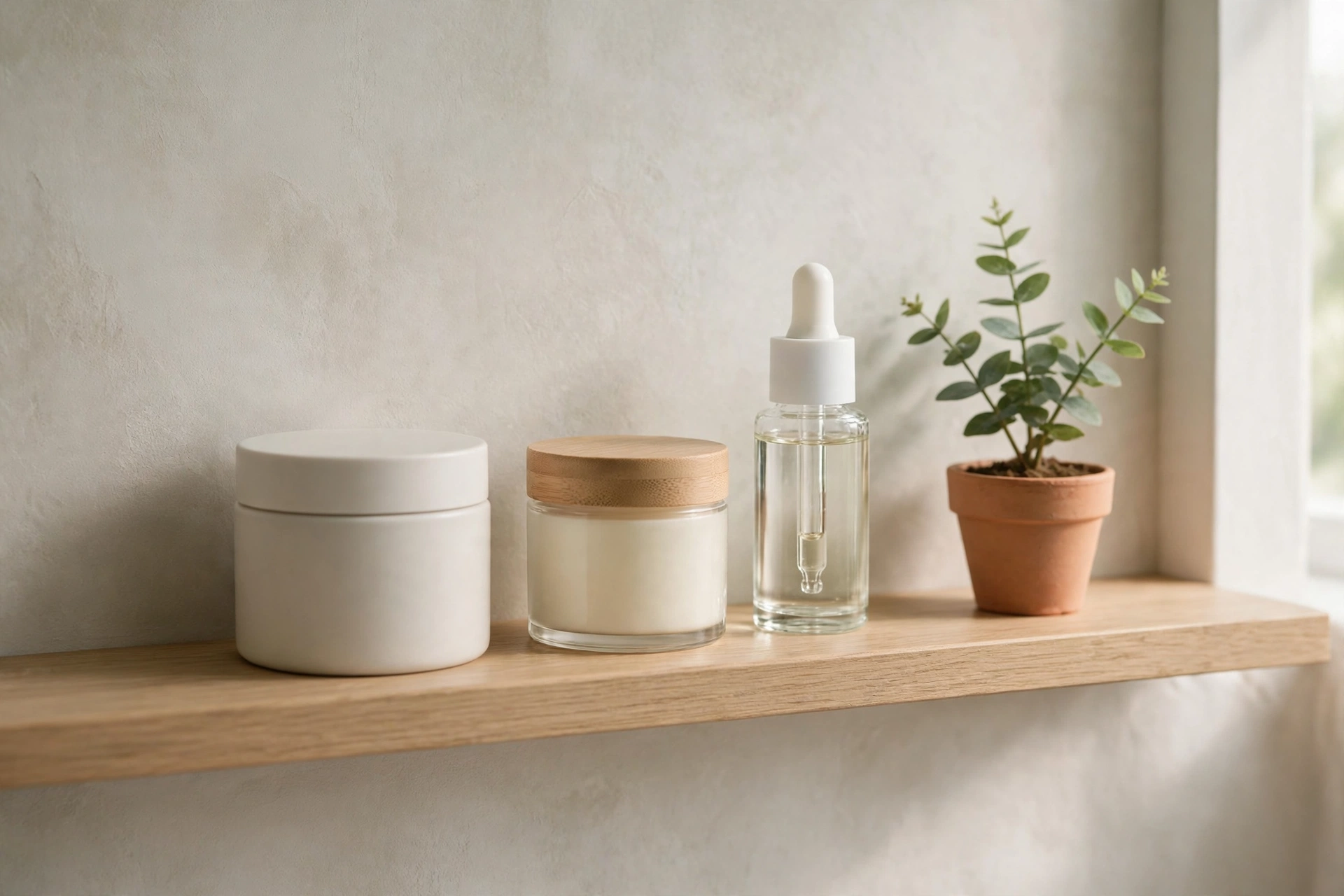
Skincare Tip: Simplify your shelf for winter. Keep the steps few and the ingredient lists short.
3. Choose Fragrance-Free: Read the Label First
Fragrance is one of the most common triggers for reactive skin, and winter is when it tends to cause the most trouble. Added perfume, essential oils, and even natural fragrance blends can irritate skin whose barrier is already stressed by cold and dry air. Choosing products labeled fragrance-free removes one of the most likely irritants right away.
It helps to know that fragrance-free and unscented are not the same thing. Unscented products can still contain masking fragrance to cover up the smell of other ingredients. Fragrance-free means no fragrance was added at all. Take a moment to scan the ingredient list before you buy. A few extra seconds at the shelf can spare your skin a rough week.

Skincare Tip: Choose fragrance-free, and read the label. Fragrance-free and unscented are not the same.
4. Press Pause on Strong Actives Until the Cold Eases
Strong exfoliating acids, high-strength retinoids, and at-home peels can be a lot for sensitive skin to handle when the weather turns cold. These ingredients work by speeding up skin turnover, which is useful in milder months. But in winter they can leave your skin stinging, peeling, or redder than usual. If your skin already feels tight or reactive, it may be telling you it needs a rest from the heavy hitters.
That does not mean giving them up forever. Try pausing the strongest ones for the coldest stretch of the season and see how your skin responds. When you do bring one back, reintroduce it slowly and watch how your skin reacts over several days. Your skin in January is not the same as your skin in June. Letting your routine change with the seasons is one of the kindest things you can do for it.
Skincare Tip: Press pause on strong actives until the cold eases. Bring them back slowly, one at a time.
5. Shield Your Face from Wind with a Soft Scarf
Wind is one of winter’s sneakiest triggers for sensitive skin. It strips moisture from your face, chills the skin, and can leave your cheeks flushed and stinging after even a short walk outside. A soft scarf wrapped loosely over the lower half of your face acts like a simple shield. It cuts the wind before it ever reaches your skin.
Choose a scarf made from a smooth, soft fabric rather than anything scratchy. Make sure it is clean, since it sits right against your face. Pull it up just before you step outside and let it down once you are back indoors. It is a small, old-fashioned habit. On a bitter day, it can be the difference between a comfortable trip home and a burning, blotchy face.

Skincare Tip: Shield your face from wind with a soft, clean scarf. Pull it up just before you step outside.
6. Cool a Flushed Face with a Clean, Cool Cloth
Coming in from the cold into a warm room can leave sensitive skin looking flushed and feeling hot. That sudden temperature swing is a classic winter trigger. Reaching for a harsh product in the moment usually makes it worse. Instead, try something much simpler: a clean cloth dampened with cool water, held gently against your cheeks for a few minutes.
The cool cloth helps your skin settle without adding any new ingredients or friction to the mix. Use plain water, keep the cloth soft, and do not rub. Just rest it against the flushed areas and let the coolness do the work. It is a quiet little reset you can do at home after a winter walk.

Skincare Tip: Cool a flushed face with a clean, cool cloth. Rest it gently, do not rub.
7. Run a Humidifier While You Sleep
Indoor heating keeps your home warm in winter, but it also dries out the air inside. That dry air pulls moisture from your skin all night long. That is why many people with sensitive skin wake up feeling tight, itchy, or flaky. Running a humidifier in your bedroom adds moisture back into the air while you sleep. It gives your skin a gentler environment for those long overnight hours.
Place the humidifier near your bed and keep it clean according to its instructions. You do not need anything fancy or expensive. Even this one change to your sleeping environment can help your skin feel less parched by morning. It also pairs well with every other tip on this list.

Skincare Tip: Run a humidifier in your bedroom while you sleep. Keep it clean.
8. Pat Dry, Never Rub, After Washing
How you dry your skin matters just as much as how you wash it. Rubbing your face with a towel creates friction, and friction is exactly what reactive winter skin does not need. A rough towel dragged across already irritated skin can leave it redder and more uncomfortable than before. That can happen even if the wash itself was perfectly gentle.
Instead, use a clean, soft towel and press it lightly against your skin to absorb the water. Pat, do not scrub, and leave your skin feeling just slightly damp. This small change takes no extra time and no extra money. Yet it removes a daily source of irritation that many people never think about. Your skin will notice the difference, even if the habit feels almost too simple to matter.

Skincare Tip: Pat dry after washing, never rub. Leave skin just slightly damp.
9. Swap Scratchy Wool for Soft Layers Against Your Skin
That cozy-looking wool sweater might be part of the problem. Scratchy wool and rough fabrics rubbing against your neck, jawline, and face can irritate sensitive skin all day long. Cold weather already has it on edge. Turtlenecks and high collars are the usual culprits, since they sit right against the most reactive areas.
Try wearing a soft layer underneath, like smooth cotton, so the scratchy fabric never touches your skin directly. The same goes for scarves and hats: soft, smooth materials are kinder than coarse knits. You do not have to give up your favorite winter clothes. Just put a gentle buffer between the fabric and your skin, and let your skin enjoy the warmth without the scratch.

Skincare Tip: Wear a soft layer under scratchy wool. Keep coarse knits off your skin.
10. Give Your Lips and the Skin Around Your Nose Extra Care
Lips and the skin around your nose take a beating every winter. Lips have no oil glands of their own, so they dry out fast in cold wind and heated rooms. The skin around the nose gets rubbed raw by tissues during cold season. These small areas are often the first to feel sore, and they are easy to overlook until they are already cracked and uncomfortable.
Keep a plain, fragrance-free lip balm close by and use it often. Use it before you step outside and again when you come back in. For the skin around your nose, dab on a little extra of your regular gentle cream and use the softest tissues you can find. A bit of advance care here goes a long way, because once lips crack, they take much longer to heal in dry winter air.

Skincare Tip: Give lips and the skin around your nose extra care. Keep a plain balm close by.
11. Keep a Simple Winter Skin Diary
Sensitive skin can feel unpredictable, but patterns are usually hiding in plain sight. A simple diary helps you spot them. Each evening, jot down a few quick notes. Write down how your skin felt, what the weather was like, and anything new you used. Note anything that seemed to set off redness or itching.
Maybe your skin always flares after windy days, or after trying a new scented product, or on days you skipped your scarf. Once you can see the pattern, you can avoid the trigger instead of guessing. A small notebook or a note on your phone is all you need, and it costs nothing but a minute a day.

Skincare Tip: Keep a simple winter skin diary. One minute a day shows you the pattern.
12. Protect Your Hands Before They Get Sore and Cracked
Hands are often the first place winter shows up on sensitive skin. Cold air, frequent washing, and dry indoor heat can leave them red, rough, and cracked. Once cracks appear they sting with every wash. Gloves are your simplest defense. Wear them every time you go outside, even for a quick trip, and keep a pair by the door so you never forget.
It also helps to moisturize your hands right after washing them, while they are still slightly damp. Wear gloves for wet chores like washing dishes. Choose soft, comfortable gloves that you actually like wearing, because the pair you reach for every day is the one that protects you.

Skincare Tip: Protect your hands before they get sore. Wear gloves outside and for wet chores.
Helpful Tips for Sensitive Skin in Winter
- Introduce only one new product at a time, so you always know what caused a reaction.
- Keep showers short and lukewarm, and avoid very hot water on your face.
- Wear sunscreen on bright winter days, since sun still reaches your skin through clouds and snow glare.
- Drink water regularly and keep your indoor air from getting too dry.
- Wash new scarves, hats, and gloves before wearing them against your face.
- Skip harsh scrubs and rough cloths while your skin feels reactive.
- See a dermatologist if redness, cracking, or itching keeps getting worse despite gentle care.
Fewer Products, Watched Closely, Calm Sensitive Skin
Sensitive skin in winter rewards less, not more. A short routine with products you already trust, plus one new habit at a time, tells you exactly what helps and what hurts.
If a week passes and your skin feels calmer, you have your answer. Keep that routine through the cold months, and change only one thing at a time from here on.
Frequently Asked Questions
Why does sensitive skin get worse in winter?
Cold air holds less moisture than warm air, and indoor heating dries the air even further. Together with wind and sudden temperature changes, this weakens the skin barrier. Skin loses moisture more easily and reacts more strongly to things it would normally tolerate. That is why redness, tightness, and itching often show up most in the coldest months.
How long should I patch test a new product?
Try a small amount on the inside of your forearm or behind your ear once or twice a day for several days. Then try a small area of your jawline for a few more days. The American Academy of Dermatology suggests testing for 7 to 10 days. Some reactions are delayed, so a longer test gives you a much clearer answer than a quick one-day check.
Is fragrance-free really better for sensitive skin?
For many people with reactive skin, yes. Fragrance is a common cause of irritation and allergic reactions from skincare, and removing it takes away one of the most likely triggers. Just remember that fragrance-free and unscented are different. Fragrance-free means no fragrance was added, while unscented products can still contain masking fragrance.
Should I stop using all active ingredients in winter?
Not necessarily. The idea is to pause the strongest ones while your skin is at its most reactive. Then bring them back slowly, one at a time, once your skin feels steady. If you are unsure about a particular ingredient, ask a dermatologist. They can help you decide what to keep and what to set aside for the season.
When should I see a dermatologist about winter skin problems?
If your skin is cracked or bleeding, talk with a dermatologist. The same applies if redness, swelling, or itching keeps getting worse, or if gentle care is not helping after a few weeks. Persistent or painful symptoms can be a sign of an underlying skin condition that needs proper assessment. This article is general information only, not medical advice.
Conclusion
Winter does not have to mean months of red, uncomfortable skin. The tips that help most are often the simplest ones. Test new products before they reach your face, keep your routine short and gentle, and read labels for fragrance. Shield your skin from wind, and pay attention to what your skin is telling you. Small habits like patting dry, running a humidifier, and wearing gloves add up to real comfort over the season.
Start with one or two tips that feel easiest and build from there. Your skin will let you know what is working. If things do not settle with gentle care, do not hesitate to check in with a dermatologist. With a little patience and a calmer approach, sensitive skin can get through winter feeling comfortable, protected, and cared for.