
Winter Skincare Routine for Dry Skin: 10 Steps for a Healthy Glow (2026)
When the temperature drops, dry skin often feels tighter, looks duller, and gets flaky in all the wrong places. Cold air outside and heated air inside pull moisture from your skin around the clock. The routine that worked beautifully in summer suddenly is not enough. That is completely normal. Winter asks for a different approach, not a more complicated one.
This winter skincare routine for dry skin walks you through ten simple steps, morning and night. The steps help your skin stay soft, comfortable, and glowing all season long. You do not need a shelf full of new products. A few smart swaps can make the biggest difference. Try a creamier cleanser, a richer moisturizer, and a little extra care after washing.
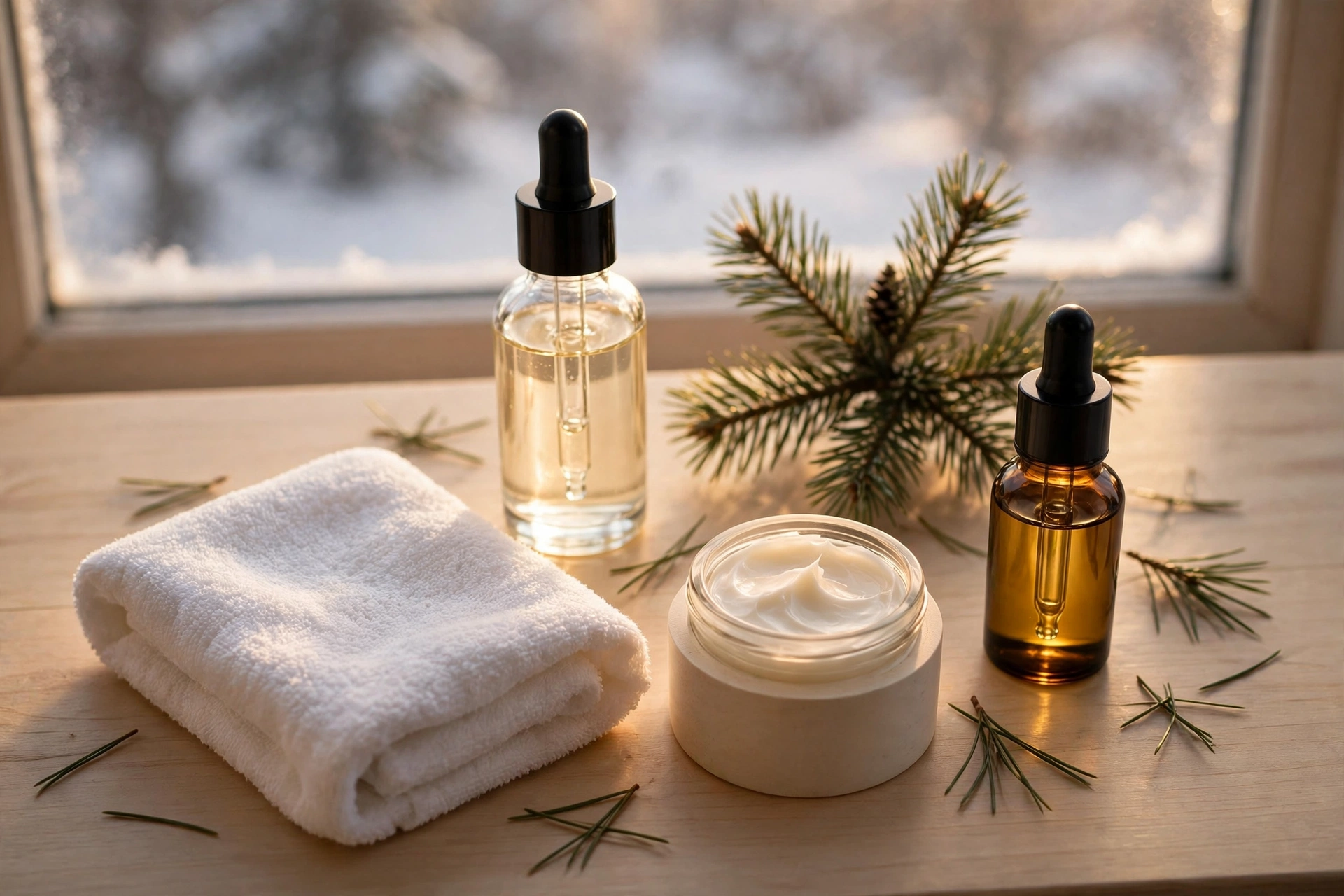
Table of Contents
- Step 1: Switch to a Cream Cleanser
- Step 2: Wash with Lukewarm Water, Not Hot
- Step 3: Moisturize on Damp Skin
- Step 4: Layer a Hydrating Serum
- Step 5: Seal It In with a Rich Cream
- Step 6: Add a Face Oil as a Winter Topper
- Step 7: Exfoliate Gently, Once or Twice a Week
- Step 8: Try an Overnight Mask
- Step 9: Don’t Skip SPF in the Morning
- Step 10: Finish with Body Cream After Every Shower
- Tips for Winter Dry Skin
- FAQ
- Conclusion
Step 1: Switch to a Cream Cleanser
The first winter swap is also the easiest. Trade your foaming or gel cleanser for a cream cleanser. Foaming formulas can leave dry skin feeling squeaky clean. That usually means they have stripped away some of the natural oils your skin needs to stay comfortable. A cream cleanser washes away makeup, sunscreen, and the day. It does so without that tight, dry feeling afterward.

Skincare Tip: Swap to a cream cleanser first. It is the easiest winter change you can make.
Use it morning and night. Massage a small amount over damp skin with your fingertips, then rinse or wipe away gently. If your skin still feels tight after cleansing, the formula is too strong for winter. Go even gentler, and let your moisturizer do the heavy lifting.
Step 2: Wash with Lukewarm Water, Not Hot
A long, hot shower feels wonderful on a freezing day. But hot water is one of the fastest ways to dry out your skin. It washes away the natural oils that keep moisture locked in. It can leave your face and body feeling itchy and tight. Lukewarm water cleans just as well, and it is far kinder to dry skin.

Skincare Tip: Keep showers lukewarm and short. Hot water strips the oils dry skin needs.
Keep showers short too. Around five to ten minutes is plenty. When you wash your face at the sink, run the water until it feels comfortably warm on the inside of your wrist. Never hot. This one small habit protects your skin barrier every single day, and it costs nothing at all.
Step 3: Moisturize on Damp Skin
Timing matters as much as the product itself. The best moment to moisturize is right after washing, while your skin is still slightly damp. Moisturizer on damp skin helps trap that surface water before it evaporates. That way your skin stays hydrated for much longer than if you wait until it is completely dry.

Skincare Tip: Moisturize within a minute or two of washing. Damp skin holds moisture best.
After cleansing, gently pat your face with a soft towel. Never rub. Leave a light layer of moisture behind. Then apply your serum and cream right away, within a minute or two. The same rule works for your body. Moisturize just after stepping out of the shower, while your skin is still damp, for the softest results.
Step 4: Layer a Hydrating Serum
Before your cream, add a hydrating serum. Serums are lightweight, watery formulas that sink in quickly. They give your skin an extra drink of moisture underneath your moisturizer. Look for ingredients known for drawing in water, such as hyaluronic acid or glycerin. They help skin feel plump and comfortable.
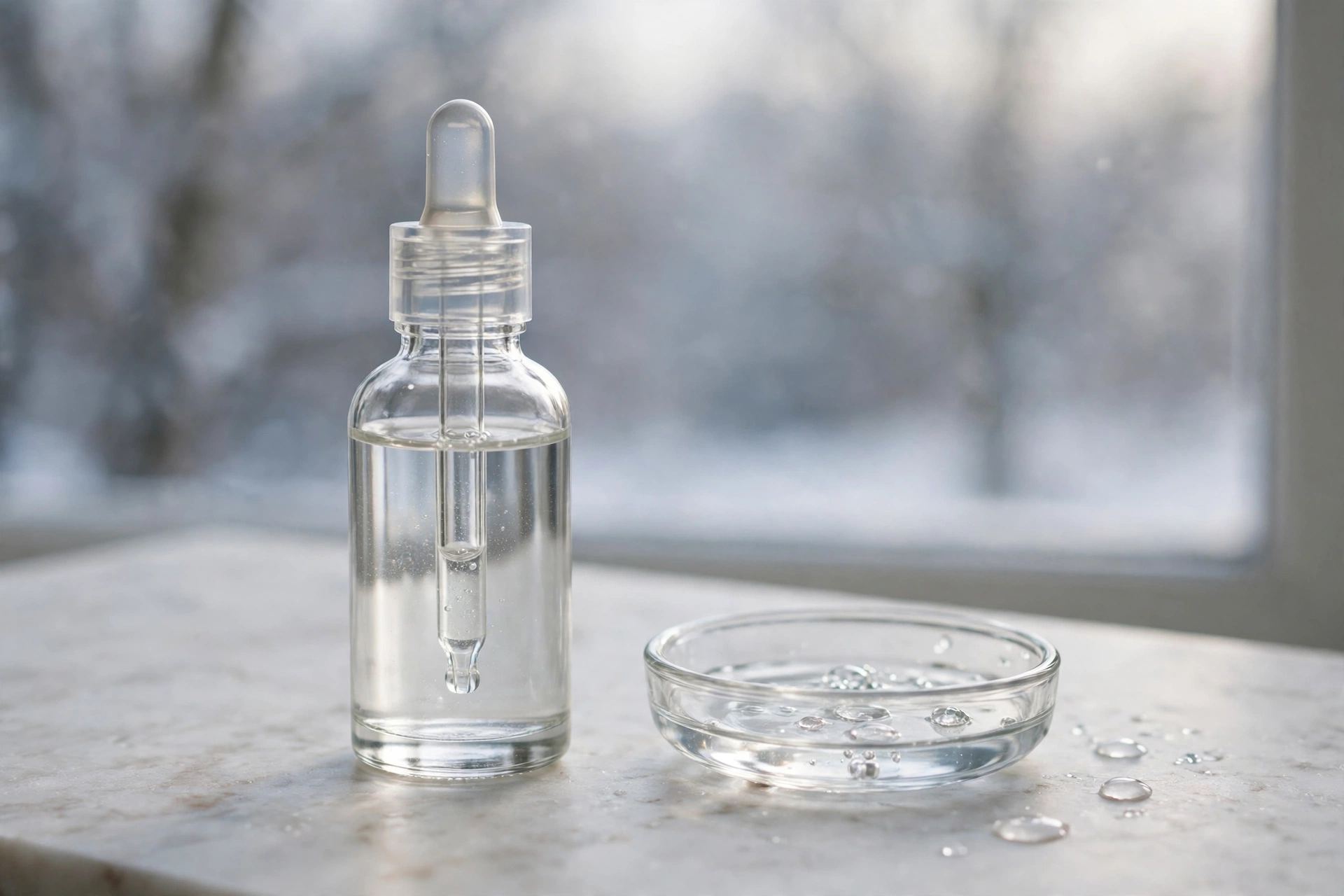
Skincare Tip: Look for hyaluronic acid or glycerin. Both draw water into the skin.
Step 5: Seal It In with a Rich Cream
This is the heart of any winter skincare routine: a richer moisturizer. Light lotions and gel creams that felt perfect in July often cannot keep up with cold, dry air. In winter, switch to a thicker cream. Choose the kind that comes in a jar and feels buttery when you scoop it out. It creates a protective layer that slows down moisture loss all day.
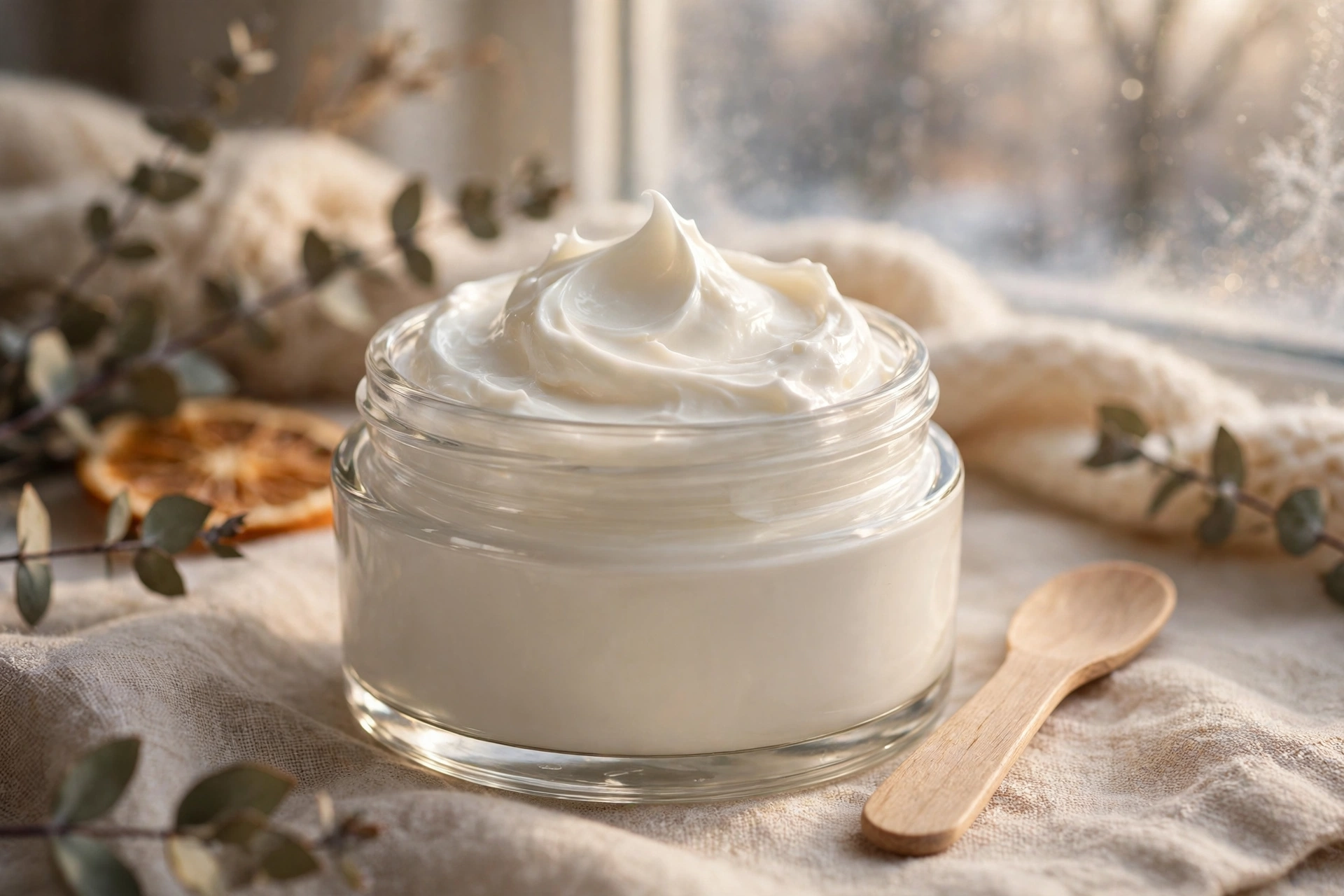
Skincare Tip: Choose a cream that comes in a jar. A buttery texture seals moisture in all day.
Ingredients like ceramides, shea butter, and squalane are popular choices for dry winter skin. They support the skin’s natural barrier and help it hold on to moisture. Apply a generous layer morning and night. Do not forget your neck. It gets just as dry as your face, and it is easy to overlook.
Step 6: Add a Face Oil as a Winter Topper
If your skin still feels dry by mid-afternoon, a face oil can be the extra layer that finally keeps it comfortable. Oils do not add water to your skin. But they are excellent at sealing in everything you applied underneath. Think of it as a cozy blanket over your serum and cream.

Skincare Tip: Press a few drops of face oil over your cream. It locks in everything underneath.
Step 7: Exfoliate Gently, Once or Twice a Week
Flaky patches make moisturizer sit on the surface instead of sinking in. So gentle exfoliation has a place in a winter routine, but less is more. Harsh scrubs and strong acids can irritate skin that is already stressed by the cold. Choose a gentle exfoliator. Use it only once or twice a week, never every day.

Skincare Tip: Exfoliate once or twice a week at most. Never exfoliate every day in winter.
Exfoliate in the evening. Then follow with your serum and your richest cream, to comfort the skin afterward. If your skin feels red, stinging, or extra sensitive the next morning, skip a week and let it recover. Smooth, calm skin is the goal. Winter is not the season to push your skin hard.
Step 8: Try an Overnight Mask
An overnight mask is one of the simplest ways to give dry skin an extra boost. It is a thicker, leave-on treatment. You smooth it over your regular night cream before bed, and it works while you sleep. Those are usually the driest hours of the day, when indoor heating is running all night.

Skincare Tip: Smooth on an overnight mask before bed. It works while you sleep.
Step 9: Don’t Skip SPF in the Morning
Winter sun still reaches your skin. Snow can reflect sunlight back up at your face, so SPF in winter still matters. Sunscreen is the last step of your morning routine, after moisturizer and before makeup. A moisturizing sunscreen formula works well in cold weather. It adds one more layer of comfort instead of drying your skin out.

Skincare Tip: Apply SPF every morning, even on cloudy days. Snow glare counts too.
Apply it every morning, even on cloudy days. Apply it even if you plan to stay mostly indoors. If your regular sunscreen feels too drying in winter, switch to a cream-based one. Layer it over your rich moisturizer. Protecting your skin now also helps keep it looking healthy and even-toned in the long run.
Step 10: Finish with Body Cream After Every Shower
Winter dryness is not just a face problem. Shins, arms, and hands get rough and itchy too. The fix is the same idea as Step 3. Apply body cream after your shower, while your skin is still slightly damp. A thick body cream or body butter holds in moisture far better than a thin lotion in cold weather.

Skincare Tip: Finish with body cream after every shower. Damp skin absorbs it best.
Tips for Winter Dry Skin
A few everyday habits support everything in the routine above. Run a humidifier in your bedroom if indoor heating leaves the air very dry. It helps your skin and your sleep. Drink water regularly through the day. Choose soft fabrics like cotton for anything that sits against your skin. Scratchy wool can irritate dry patches.
When you come in from the cold, let your skin warm up gradually. Do not hold your face right next to a heater. Give any change at least two weeks before judging it. Winter skin recovers slowly. If your skin becomes cracked, painful, or very irritated, talk to a skincare professional in person. They can give advice tailored to you.
Start with Two Swaps, Not Ten
Ten steps can look like a lot on paper. In practice, two of them do most of the work: the cream cleanser and the richer moisturizer. Start with those two and use them every day for two weeks.
Once those feel normal, add the next easiest step, like moisturizing on damp skin. Small changes that stick beat a perfect routine that lasts three days.
FAQ
What is the best winter skincare routine for dry skin?
A simple AM and PM routine works best. Use a gentle cream cleanser, a hydrating serum on damp skin, a rich cream to seal in moisture, and SPF every morning. Add a face oil or overnight mask at night when your skin feels extra dry. Keep exfoliation to once or twice a week.
Should I moisturize on damp or dry skin in winter?
Damp skin. Apply your serum and moisturizer within a minute or two of washing, while your skin is still slightly damp. This helps trap water in the skin before it evaporates. It also makes the same products work noticeably better in cold, dry air.
Do I really need sunscreen in winter?
Yes. Winter sunlight still reaches your skin, and snow reflects it. Daily SPF is worth keeping all year. Choose a moisturizing, cream-based sunscreen in winter, so it adds comfort instead of drying your skin out.
How often should I exfoliate dry skin in winter?
Once or twice a week is enough. Gentle exfoliation helps remove flakes so moisturizer can sink in. But overdoing it can irritate skin that is already stressed by cold weather. If your skin feels sensitive, skip a week and focus on moisture instead.
What is the difference between this routine and a general skin barrier routine?
A general barrier routine focuses on repairing the skin barrier at any time of year. This routine is built specifically for winter. It covers morning and evening steps, cold-weather swaps like cream cleansers and richer creams, and seasonal habits. Those habits include lukewarm water, SPF in snow glare, and body care after warm showers.
Conclusion
Winter does not have to mean months of tight, flaky skin. Build your routine on gentle cleansing, moisture layered on damp skin, a rich cream, and daily SPF. That will keep your skin soft and comfortable until spring. Start with one or two swaps. The cream cleanser and the richer moisturizer are the easiest. Add the rest as your skin asks for them.
Your skin will thank you for the consistency, not the complexity. Keep it simple, keep it gentle, and enjoy that healthy winter glow.
Pingback: Simple Skin Barrier Routine: 7 Steps (2026)
Pingback: Winter Makeup for Dry Skin: 13 Steps (2026)
Pingback: Winter Hair Care Routine for Dry, Frizzy Hair: 12 Steps for Soft, Smooth Hair - Mereio | Honest Product Reviews & Seasonal Deals
Pingback: Morning Skincare Routine for Beginners: 11 Steps for Healthy, Glowing Skin - Mereio | Honest Product Reviews & Seasonal Deals